A Korean Sludge Dryer and India's Zero Liquid Discharge Plants: What Carries Over
A Korean sludge dryer burned 28.3 % less LNG per tonne after a Jetomat loop replaced its trapped outlets. What carries over to the dryer at the end of a zero liquid discharge plant, and what to check.
On this page
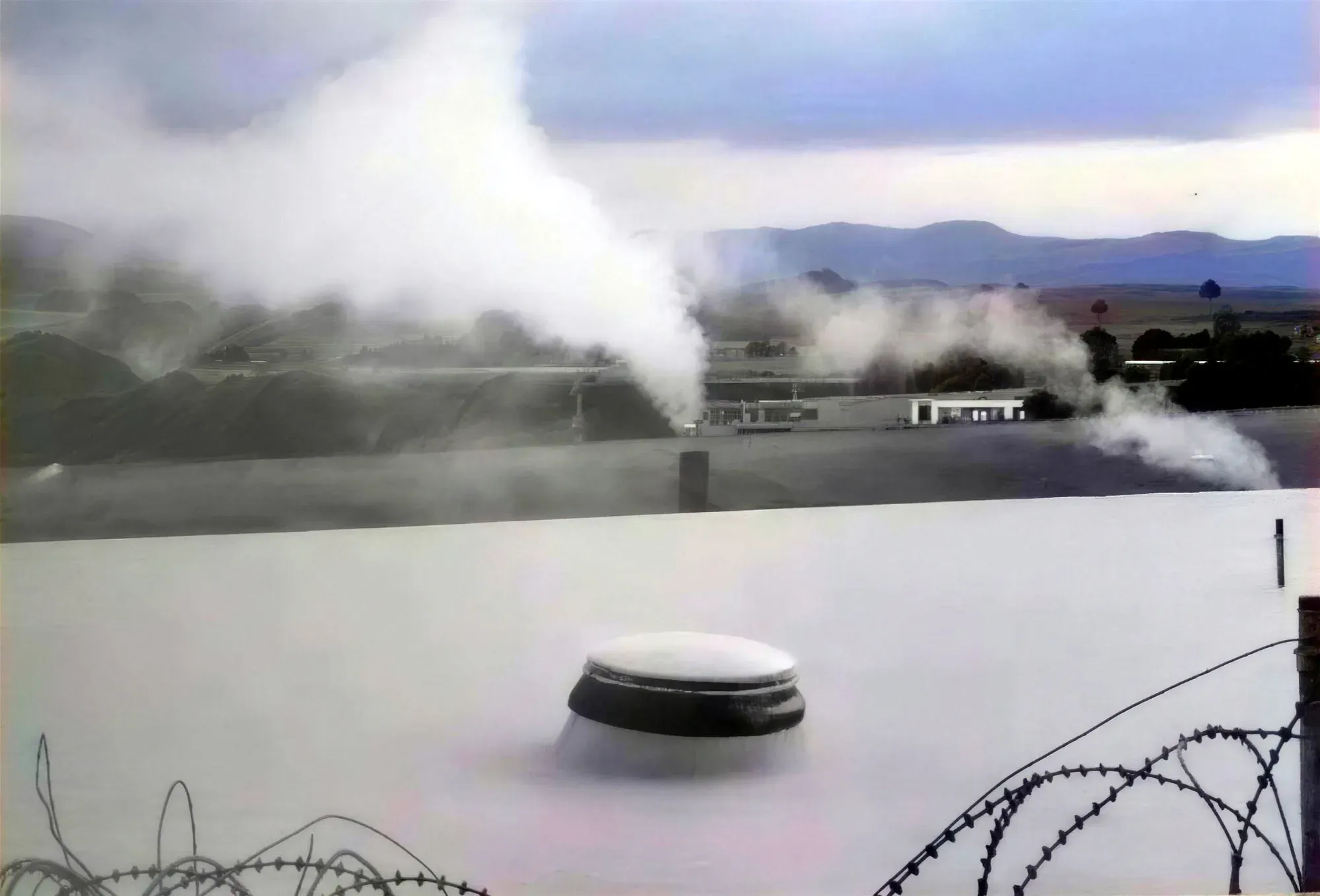
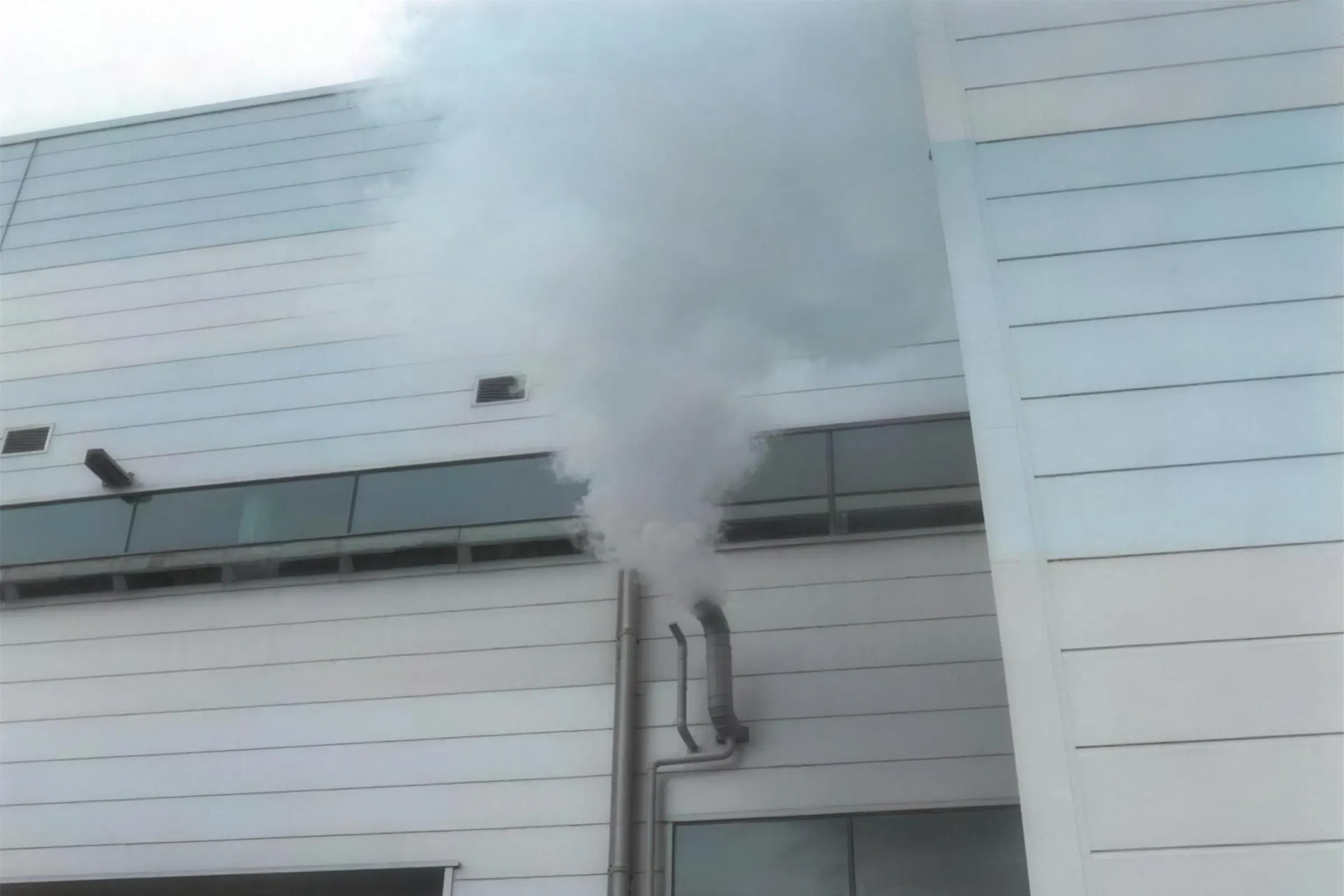
A display-panel plant in South Korea dries 73 t of sludge a day on a steam-heated dryer. The dryer drained through steam traps, one with its bypass open, into a condensate tank whose vent carried a plume. After a Jetomat went on the steam supply, LNG per tonne of sludge fell from 106.5 to 76.4 m³ in the test week: 28.3 % less.
The picture at the top is that tank vent before the change. (Photo: Baelz installation partner.) The full case study is here.
Chemical clusters that run zero liquid discharge (ZLD) effluent plants, where the plant may release no liquid effluent, end the treatment train with sludge and salts to dry before disposal. That dryer is a steam consumer like any other. This post is about which parts of the Korean result carry over to it, which do not, and why the cheapest time to fit the loop is before the dryer is piped. It does not cover the discharge rules themselves: what your plant may release, and how the dried sludge must be handled, are set in your own plant’s permits. Check them there.
What changed on the Korean dryer
- Before: main steam fed the dryer body and its rotor shaft through a valve. Both condensate outlets drained through steam traps, one with its bypass open, into a tank that vented.
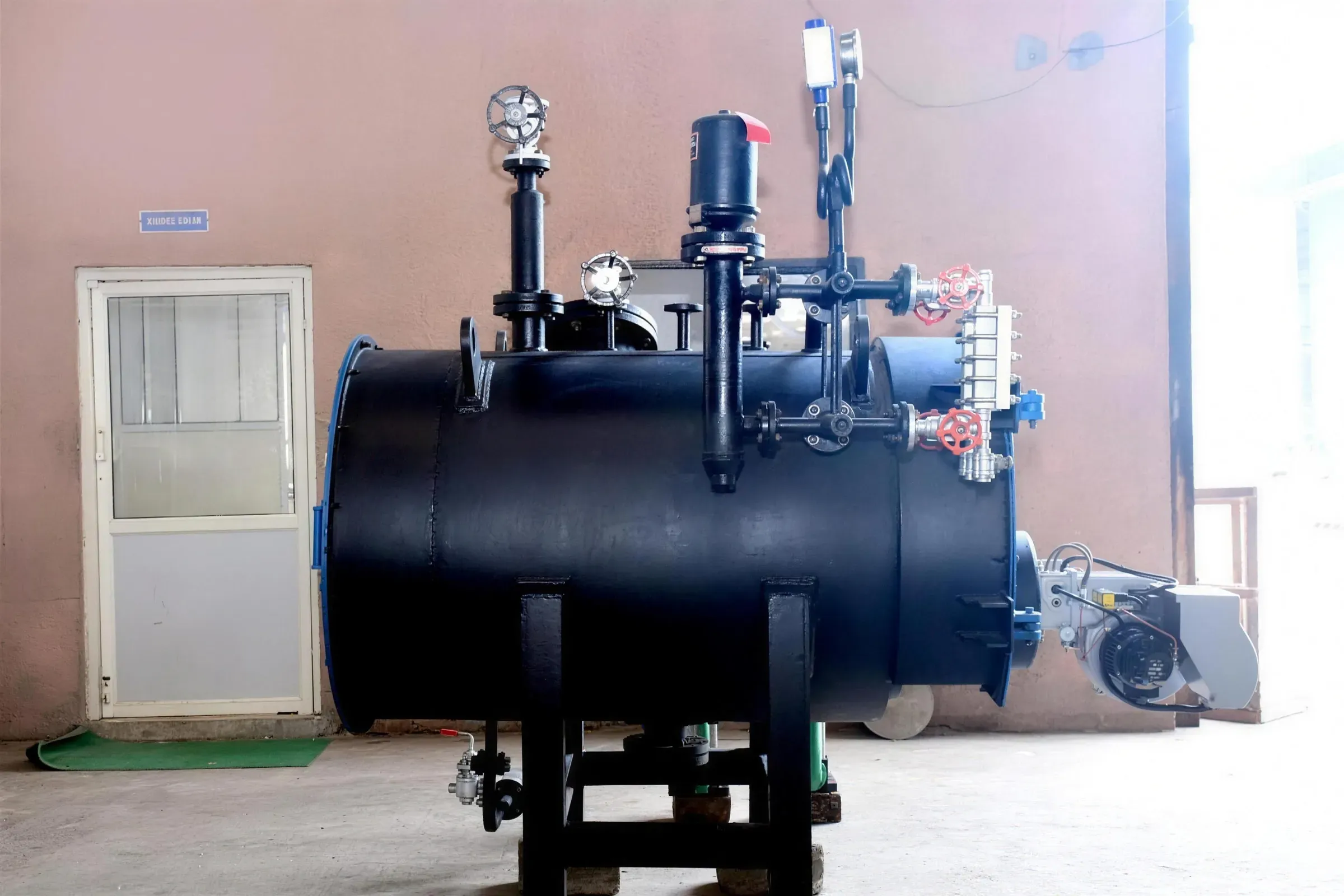
- After: a variable-nozzle Jetomat on the main steam feeds the dryer. The traps came out, both outlets drain straight to the tank, and the tank’s flash steam is the Jetomat’s suction.
| Before (about a 3-month average) | After (test week) | |
|---|---|---|
| LNG per tonne of sludge | 106.5 m³ | 76.4 m³ (−28.3 %) |
In the test week, 1 to 7 October, the plant dried 510 t of sludge on 38,949 m³ of LNG. It puts the saving at about Rs 2.2 crore a year, on 73 t a day and 192 operating days.
Where the 28 % came from
Three losses stopped at once:
- Live steam through the open bypass. With a trap on bypass, steam blew straight through the dryer to the tank.
- Flash at the tank. What flashed in the tank went up the vent. Now it goes back into the dryer as suction.
- Condensate standing in the dryer. A trapped outlet holds condensate back in the shaft and the jacket, and a flooded surface dries slowly. The Jetomat keeps steam moving through every outlet and sweeps the condensate out.
The same fault, a trap that holds back condensate and a bypass opened to cure it, turns up on corrugators, paper machines and textile ranges too; the trap that sets the drying rate follows it across five machines.
What carries over, and what does not
The mechanism carries over to any rotor dryer: a jacketed body around a hollow steam shaft that carries discs or paddles. Baelz reports that on drum dryers the loop holds the same temperature along the whole length, within about 1 °C, with a surface about 15 °C hotter at the same supply pressure. Steam-tube dryers are outside that experience: ask before assuming the loop fits.
The percentage does not carry over. It measures how much one Korean dryer was losing. A dryer whose traps work and whose tank does not vent will save less. And it is a share of the fuel on that dryer, per tonne of that sludge, not of a boiler house’s fuel bill. Sludge and salts from an effluent plant carry their own moisture, and the water to be driven off sets the steam per tonne.
The gain may show as output instead. Where the dryer holds back the plant, a hotter, evenly drained surface can mean more tonnes rather than less fuel. Baelz reports a disc dryer at a rendering plant in Spain that gained 18 % in output, one extra batch a day, with a Jetomat in recirculation.
On a dryer still being specified, the loop is a few lines on a drawing
Baelz’s engineering documentation sets out what the loop needs:
- Steam into the shaft’s rotary joint and the top of the jacket in parallel from one supply, never in series.
- Condensate out low from both, to one separator.
- One level-controlled drain per loop, in place of the outlet traps.
- A vacuum breaker on the separator.
- Motive steam at least 1 bar above the dryer’s working pressure.
On a dryer still being specified, each of these is a line on the drawing, and the supply pressure can be chosen with the margin in it. A Baelz disc dryer in Belgium shows the shape: 10 bar g motive steam feeds the dryer at 8 bar g and draws 2 t/h of 7 bar g steam back from the separator. On a dryer already running, each item is a pipe change in a shutdown, and if the main runs only just above the dryer’s pressure, the margin is not there to find.
Measure it the way the Korean plant did
The Korean plant judged the change on LNG per tonne of sludge, a number a plant already tracks. Use the same idea on your own dryer, with two cautions.
- A week is a test, not a verified saving. The academy lesson Proving the savings asks for a baseline of a full season at least, on the same meters, fixed in writing before the work.
- Log the feed moisture with the fuel. Wetter sludge needs more steam per tonne; without the moisture, a wet month can hide a saving or a dry month can invent one.
For checking anyone’s savings claim, ours included, see five ten-minute tests.
What we need from you
- The dryer type (drum, disc, paddle or steam-tube) and its working steam pressure.
- The supply steam pressure available at the dryer.
- Tonnes of wet sludge a day, with the moisture in and out.
- How the outlets drain today: traps, bypasses, and where the condensate goes.
- Your fuel or steam per tonne of sludge, if you log it, and the operating days a year.
FAQ
Will the sludge dryer on a zero liquid discharge plant save 28 %?
Not necessarily. The 28.3 % belongs to one Korean dryer, measured over one test week against a three-month average, and that dryer had a trap bypass open and a venting tank. Your saving depends on how much your dryer loses today.
Which dryers take the Jetomat loop?
Drum, disc and paddle dryers: a jacketed body around a hollow steam shaft. Steam-tube dryers are a different case; ask us before assuming the loop fits.
What steam pressure does the loop need?
Motive steam at least 1 bar above the dryer's working pressure. On a dryer still being specified, choose the supply pressure with that margin in it.