The Trap That Sets the Drying Rate: One Fault, Five Machines, One Rule
Corrugator plates, paper cylinders, textile cans, plywood platens and sludge dryers fail the same way. Why the trap sets the drying rate, and the one rule that fixes it.
On this page
A corrugator, a paper machine, a textile range, a plywood press and a sludge dryer look nothing alike. Their steam systems fail in exactly the same way, and in the same order: the trap waits, the surface floods, the operator opens the bypass.
We see this in every one of these industries. The fix is the same in all five, and so are the mistakes people make when they apply it.
1. Why a trap sets the drying rate
A steam trap is passive. It opens only when pressure pushes condensate into it. On a drying surface, three things work against it at once:
- The water stays inside. On a rotating cylinder the condensate rims against the shell above about 3 g. On a flat plate or platen it simply pools.
- A water film blocks heat. The condensate film resists heat 100 to 150 times more than the steel wall it lines.
- The cold end fills with air. Steam velocity falls to zero at the outlet, and air drawn in at every stop collects there. Ten per cent air cuts the heating capacity roughly in half.
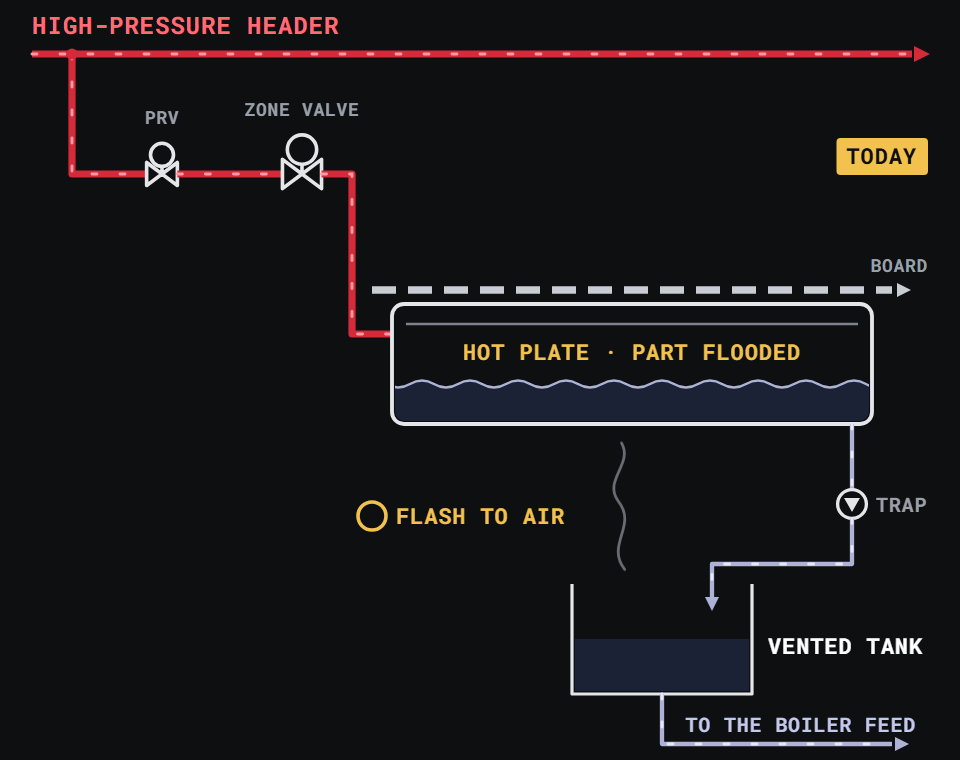
So the surface runs cold, the machine slows to protect the product, and somebody cracks the trap bypass to clear it. Live steam then runs to drain all shift: about 85 kg/h through one quarter-inch crack at 8 bar g.
2. The same fault on five machines
| Machine | What the trap does to it | What the records show |
|---|---|---|
| Textile drying tower, Spain | The bottom cylinders flood first | Six cylinders at 150 °C, the seventh at 100 °C, the eighth at 80 °C; all eight at 150 °C after one recirculation loop (case) |
| Paper drum dryer (Baelz comparison) | Shells run at different temperatures | A 15 °C spread (135 to 120 °C) with a control valve and seven traps; about 1 °C (145 to 144 °C) with recirculation and two traps |
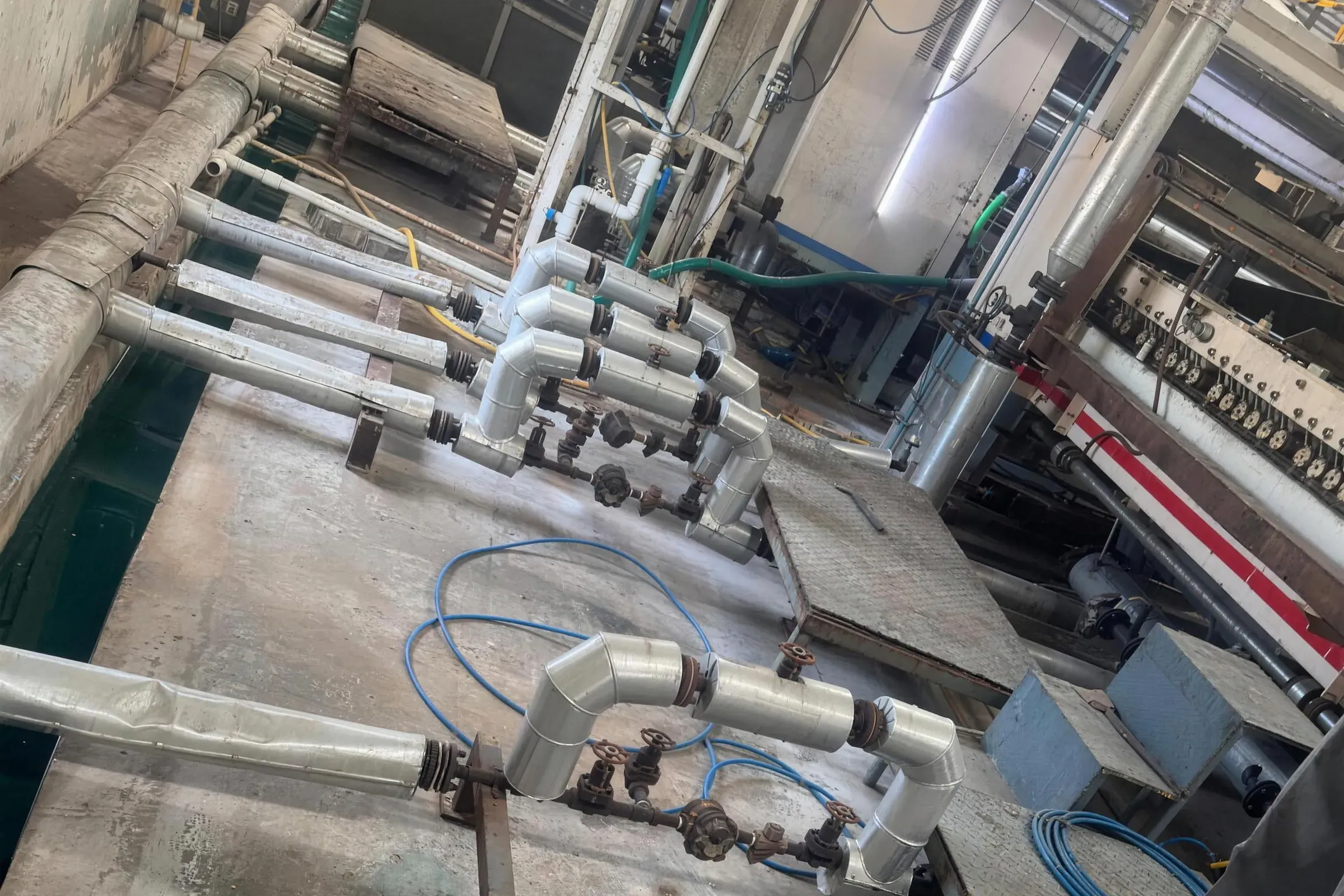
| Corrugator hot-plate deck | The middle zones go cold first | A trap under every plate; the loop holds the zones within an 8 °C band |
| Plywood hot press | Platens flood between cycles | A heat-load calculation puts a 15–17-daylight press at 803–887 kg of steam a cycle; logged plants ran 1,011, 1,176 and 1,708 |
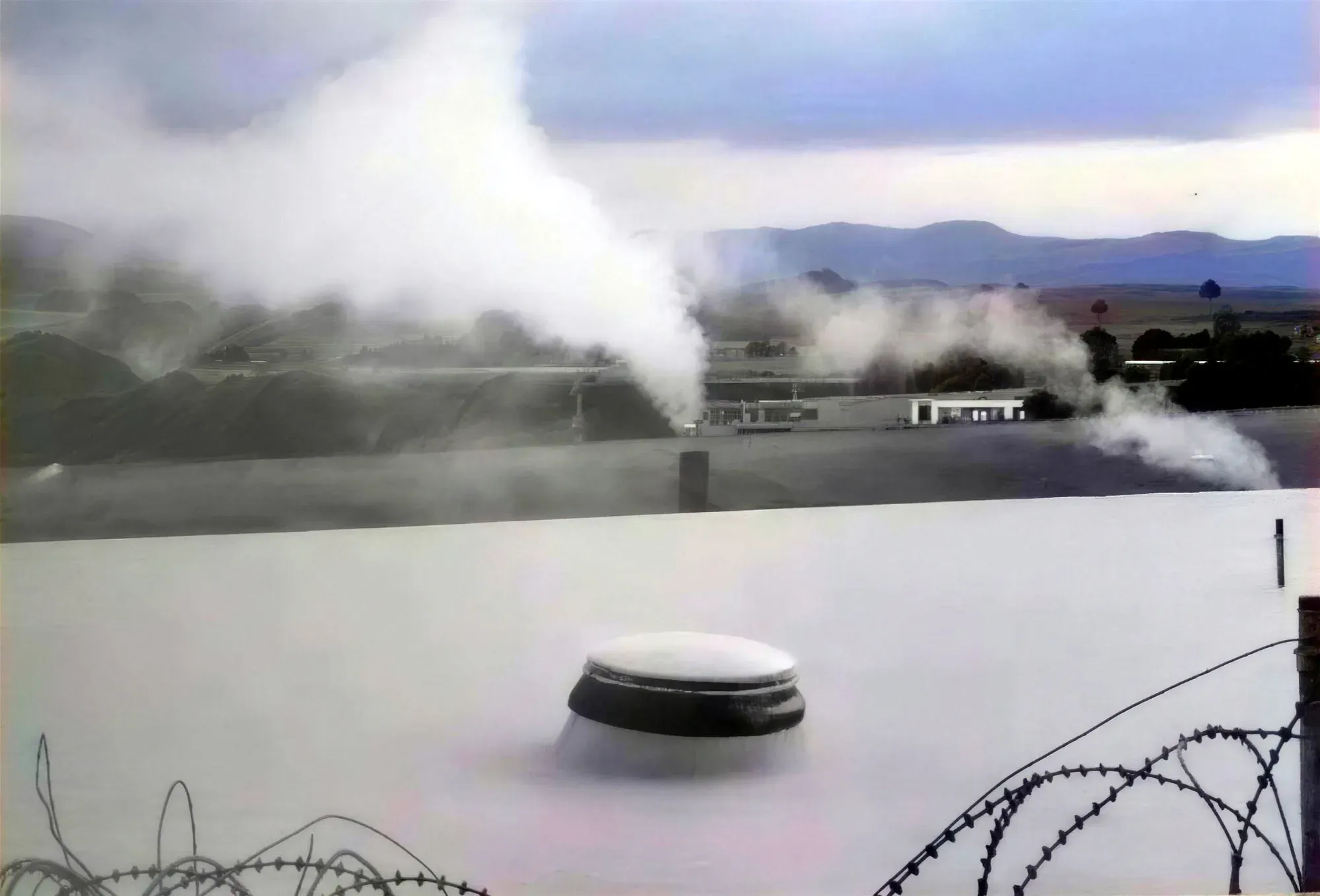
| Sludge dryer, South Korea | A trap with its bypass open, a plume at the tank vent | LNG per tonne of sludge from 106.5 to 76.4 m³ in the test week (case) |
Different products, different pressures, the same physics. A useful field check follows from it: a well-drained surface runs 10 to 25 °C below the steam temperature. A bigger gap means condensate is sitting inside.
3. The one rule
Give each pressure group its own loop, and make the drain a pump.
A pressure group is every surface that runs at one pressure on one machine section: a stack of cans, a deck of plates, a press, a dryer section. Each group gets a variable-nozzle Jetomat as its control valve. The surfaces drain without traps into one separator, and the separator’s vapour is the Jetomat’s suction. Steam keeps moving through every surface, so the condensate is swept out instead of waiting for a trap.
The rule has a few hard edges, and they are where retrofits go wrong:
- One loop per duty class. Don’t hang unlike consumers off one jet.
- A separate flash vessel for each pressure level.
- At least 1 bar between loops if they are ever cascaded.
- A check valve on every collector, so no zone can feed backwards.
- Size for a healthy opening. A variable nozzle should run 20 to 80 % open across the grades it serves.
4. Where the five machines differ
The rule is shared. The detail is not:
- Textile ranges stop and start. When the drive stops, the loop drops to a standby pressure (0.8–1 bar g on a sample range) instead of holding idle cans at running pressure.
- A Yankee has nowhere to cascade. All its blow-through must come back under flow control, or the thermocompressor chokes and the cylinder floods.
- On a plywood press line the reducing station can go. The presses take full boiler pressure as motive, and the pressure drop the reducing station used to waste pumps the loop.
- On a corrugator, two loops serve the whole machine. The old reducing station becomes the pump.
- On a dryer with an open condensate tank, the tank’s flash is the obvious suction.
5. Recirculated is not saved
Here proposals overstate. The steam a loop recirculates is blow-through going round again. It buys real things: drainage, a thin film and even surfaces. It is not, by itself, the fuel saving.
The saving is the flash and blow-through that used to reach a vent or a condenser, the steam you stop throttling through a reducing station, the standby hours, and the condensate returned hot. Size the loop on the physics and claim the saving on the meter. At one Gujarat corrugator the meter said 20 to 28 kg of wood saved per tonne of board.
What we need from you
Send us how your machine is split into pressure groups, the supply and header pressures, how many traps it runs on, and where the condensate goes today. That is enough to tell you how many loops it needs and what it could be losing.
FAQ
Do all the traps have to go?
The traps on the drying surfaces go. Each loop keeps one separator and one level-controlled drain, so a range of twenty cans ends up with one drain point instead of twenty traps.
Is the recirculated steam the saving?
No. Recirculation buys drainage and even temperatures. The fuel saving is the flash and blow-through that used to be vented, the steam you no longer throttle through a reducing station, the standby hours, and the condensate returned hot. Claim it on a meter.
What do you need from us for a first answer?
How the machine is split into pressure groups, the supply and header pressures, how many traps it runs on, and where the condensate goes today.