More Motive Steam, Less Suction: The Choking Point in a Thermocompressor
Past its choking point a thermocompressor recovers less flash when it gets more motive steam. Why it happens, how to spot it in your logs, and what a variable nozzle changes.
On this page
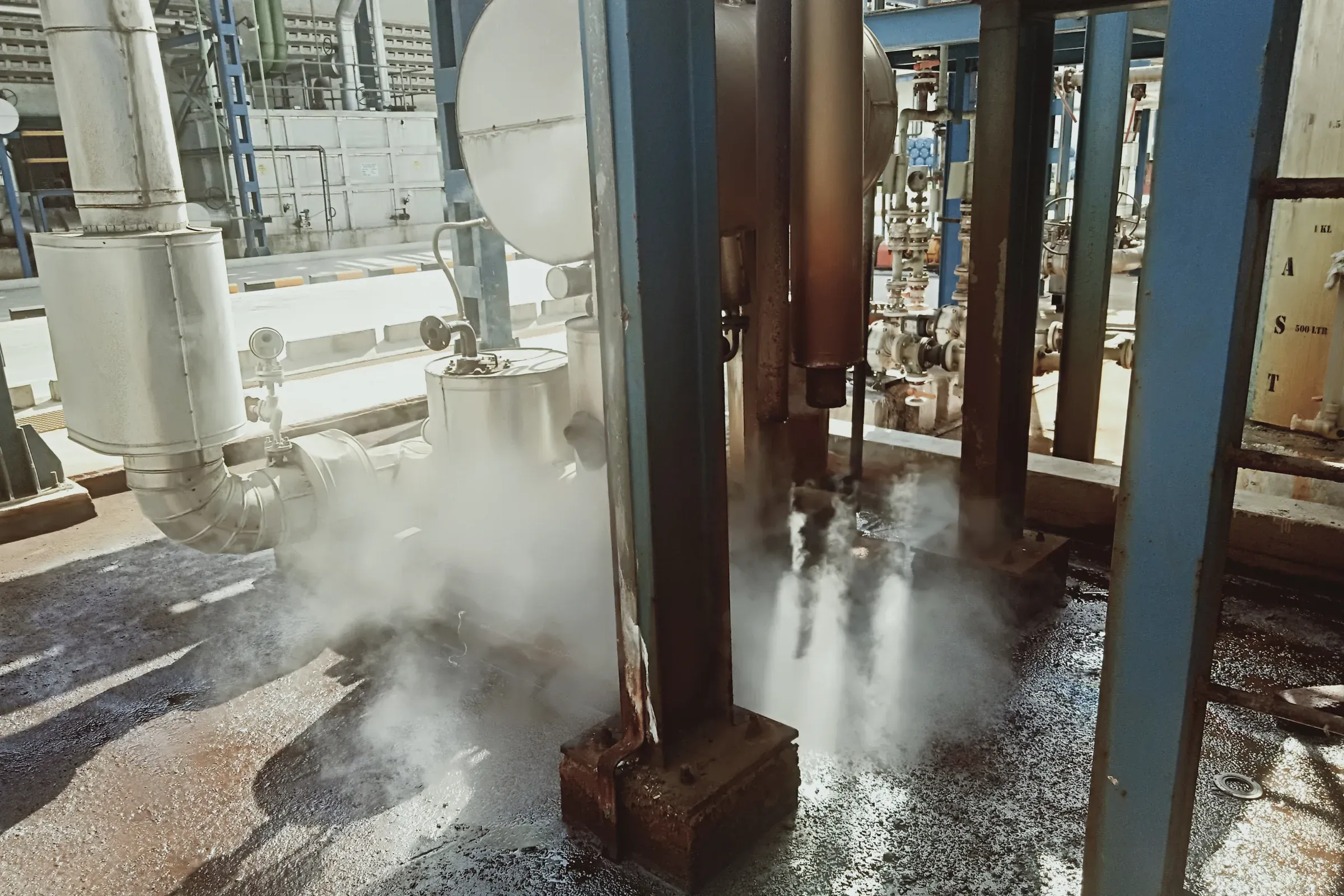
A flash vessel starts to vent. The operator does what feels right and gives the thermocompressor more motive steam so it pulls harder. The vent gets worse, the boiler works harder, and nobody can say why. The machine is past its choking point, and on the far side of that point more motive steam means less suction.
This is not a fault. It is the physics of a steam jet, and Baelz, who make the Jetomat, put it in one plain line in their engineering documentation. Here is where that line comes from and how to spot it in your own logs.
Four numbers describe the duty
Every thermocompressor duty comes down to three pressures and one ratio:
- Motive pressure, Pm: the high-pressure steam that drives the jet.
- Suction pressure, Ps: the flash or low-pressure steam being recovered.
- Discharge pressure, Pd: the header or user the mixture goes to.
- Entrainment ratio: kilograms of suction steam carried per kilogram of motive.
Take the process plant in South Korea that lifts the flash off a condensate drum into its LP header. Its Jetomat runs on 12.5 bar g motive, draws flash at 0.2 bar g and delivers at 1.56 bar g. In absolute terms that is about 13.5, 1.2 and 2.6 bar a, so the compression ratio, Pd ÷ Ps, is about 2.1. At that duty 4,700 kg/h of motive carries 1,100 kg/h of flash: about 0.23 kg of flash per kg of motive.
Lift harder and the ratio drops fast. The worked example in our academy deep-dive on thermocompressors lifts atmospheric flash into a 3.4 bar g header, a compression ratio near 4.5, and the maker’s selector gives only about 0.03 kg of flash per kg of motive. Every entrained kilogram is one the boiler does not raise, so the entrainment ratio is where the money is.
Two throats, two limits
A thermocompressor has two narrow points, and each one chokes in its own way.
The nozzle throat. Motive steam reaches the speed of sound at the throat and, in Baelz’s figures, leaves the nozzle at 457 to 762 m/s. Once the throat is sonic, the flow through it is set by the throat area and the motive pressure, and nothing downstream changes it. Through a fixed throat the flow rises roughly in proportion to the absolute motive pressure: going from 7 to 10 bar g, about 8 to 11 bar a, passes about 37 % more motive steam.
The diffuser throat. All the steam, motive plus suction, has to leave through the diffuser throat, and that throat can pass only so many kilograms. Baelz’s documentation says it directly: “Under some conditions of operation usually at low steam pressures, a thermocompressor may ‘choke’ because the diffuser throat cannot pass all the mixed steam. When this occurs, an increase in motive steam causes a decrease in suction steam.”
The “low steam pressures” part follows from the same physics. A sonic throat passes kilograms in proportion to the pressure at it, so the same throat passes fewer kilograms on a low-pressure duty. Lifting flash into an LP header is exactly that duty.
Why adding motive backfires
Put the two throats together. With the diffuser throat full, the total leaving the machine cannot rise. Push more motive steam in and it takes up room the flash was using. Suction flow falls, the flash vessel pressure climbs, its vent opens, and the motive meter reads higher than before. The plant pays more steam for less recovery.
On a fixed-nozzle thermocompressor the only handle is the motive pressure, and the boiler moves it too. When plant demand drops and the boiler pressure climbs, the fixed throat passes more motive steam whether anyone wants it or not. Turn the motive down instead and the jet loses the velocity it needs; the academy lesson covers that side, the break point where entrainment collapses. A fixed nozzle can run out of room on both sides.
What the variable nozzle changes
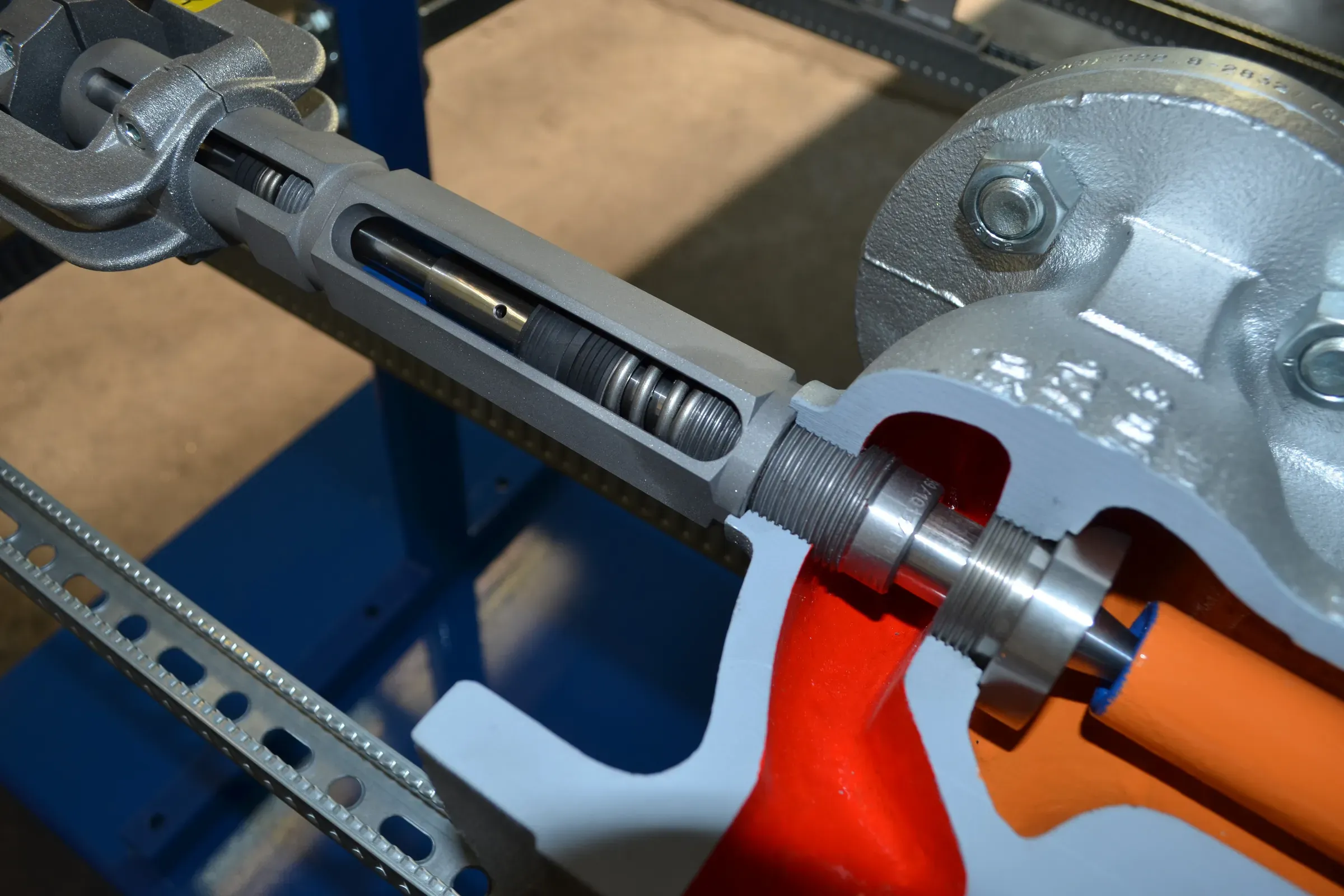
In a Jetomat a tapered spindle sits in the nozzle throat, stroked by an actuator under a pressure controller. The throat area follows the spindle, so the kilograms of motive steam are set by the spindle, not by whatever the boiler pressure happens to be. Each kilogram still expands from full line pressure, so the jet stays strong at part load. Baelz describe the variable nozzle as more efficient “because it uses the full velocity energy of the motive steam supply even at low flow.”
For choking this matters in two ways:
- A rise in boiler pressure no longer pours extra motive into a full diffuser. The controller watches the discharge pressure, and the spindle closes a little.
- The diffuser is checked across the plant’s real range. Baelz’s data sheet for a flash-steam ejector asks for the discharge conditions at both maximum and minimum, because the low-pressure end is where the diffuser throat runs out of room. A selection made at one point never looks at that end.
The diffuser still has a limit; no nozzle design removes it. The spindle keeps the motive inside the room the diffuser leaves for the flash, instead of letting the boiler decide. Our earlier post on controllable and fixed ejectors makes the same comparison for dryer groups; this is the choking side of it.
How to check your own machine
You need the three pressures logged at the same minute, over a few days that include both high and low boiler pressure.
- Plot suction pressure against motive pressure. If suction pressure rises when motive pressure rises, the flash is being pushed back and the diffuser is the limit.
- If motive and discharge are metered, suction flow is discharge minus motive. Watch whether it falls as the motive climbs.
- Note when the flash vessel vents. If it vents on high-boiler-pressure days rather than low ones, suspect choking before you suspect the flash load.
- Work out Pd ÷ Ps in absolute terms for the worst hour. Above about 1.8 the machine runs sonic, and the room between too much motive and too little is narrow.
What we need from you
- Motive pressure, lowest and highest over a typical week, in bar g.
- Suction pressure and flash flow, kg/h, at low and high load.
- Discharge pressure at the header, lowest and highest.
- Motive and discharge flow, if either is metered.
- The thermocompressor’s nameplate or drawing, and whether its nozzle is fixed or spindle-controlled.
FAQ
What does it mean when a thermocompressor chokes?
The diffuser throat is passing as much mixed steam as it can. From that point an extra kilogram of motive steam takes the place of suction steam, so the recovery falls as the motive rises.
How can I tell if my thermocompressor is past its choking point?
Log motive, suction and discharge pressure at the same minute over a few days, with motive and discharge flow if they are metered. If suction pressure climbs, or suction flow falls, when motive pressure goes up, the diffuser is the limit.
Does a variable nozzle remove the choking point?
No. The diffuser still has a limit, and it is checked against your lowest and highest pressures. What the spindle changes is that the motive flow no longer rises by itself with boiler pressure, so the controller can keep it inside what the diffuser can pass.