"Feed at 95 °C Needs No Oxygen Scavenger": What an Open Feed Tank Can Do, and When a Deaerator Pays
An open feed tank at 95 °C cuts dissolved oxygen but cannot remove it. What a hot, vented tank can and cannot do, what the scavenger costs in blowdown, and when a pressurised deaerator pays.
On this page
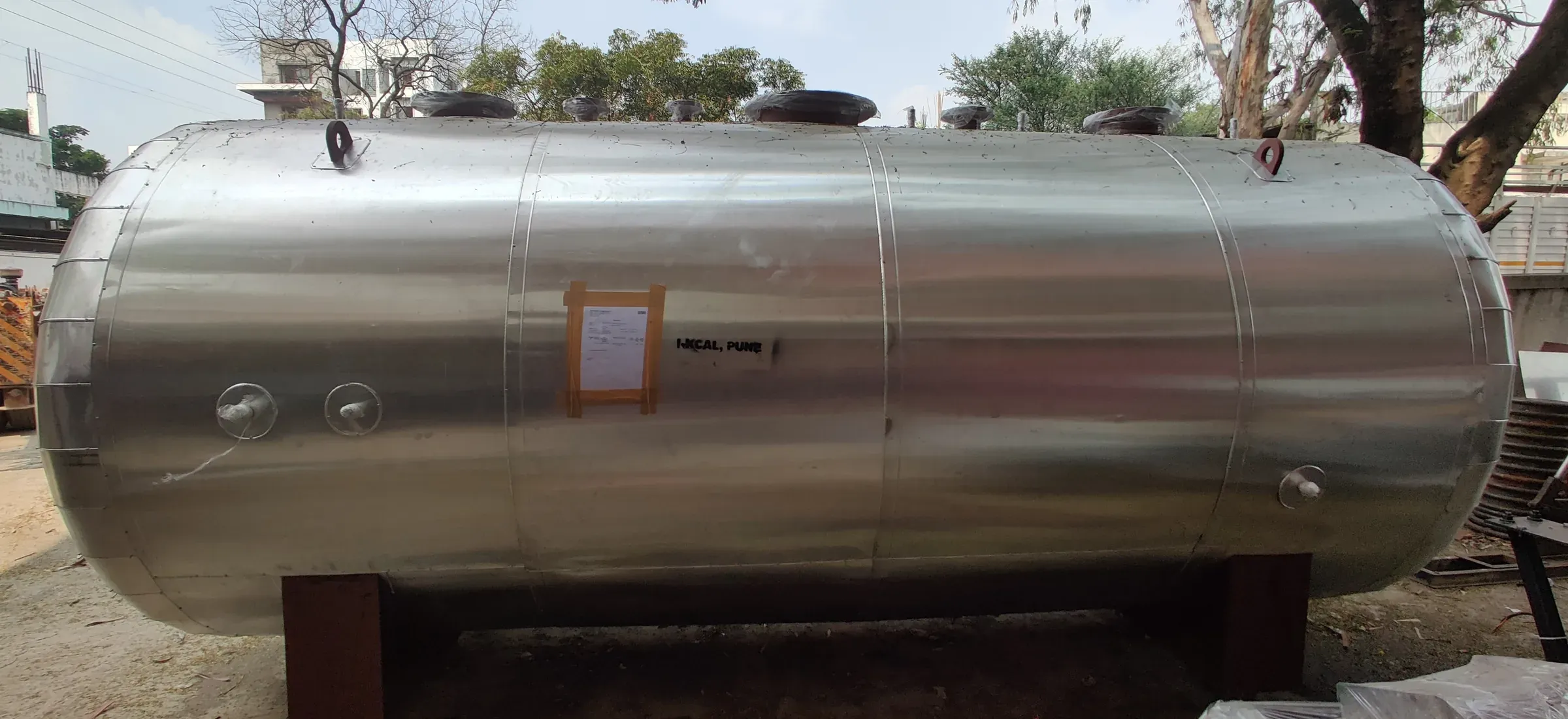
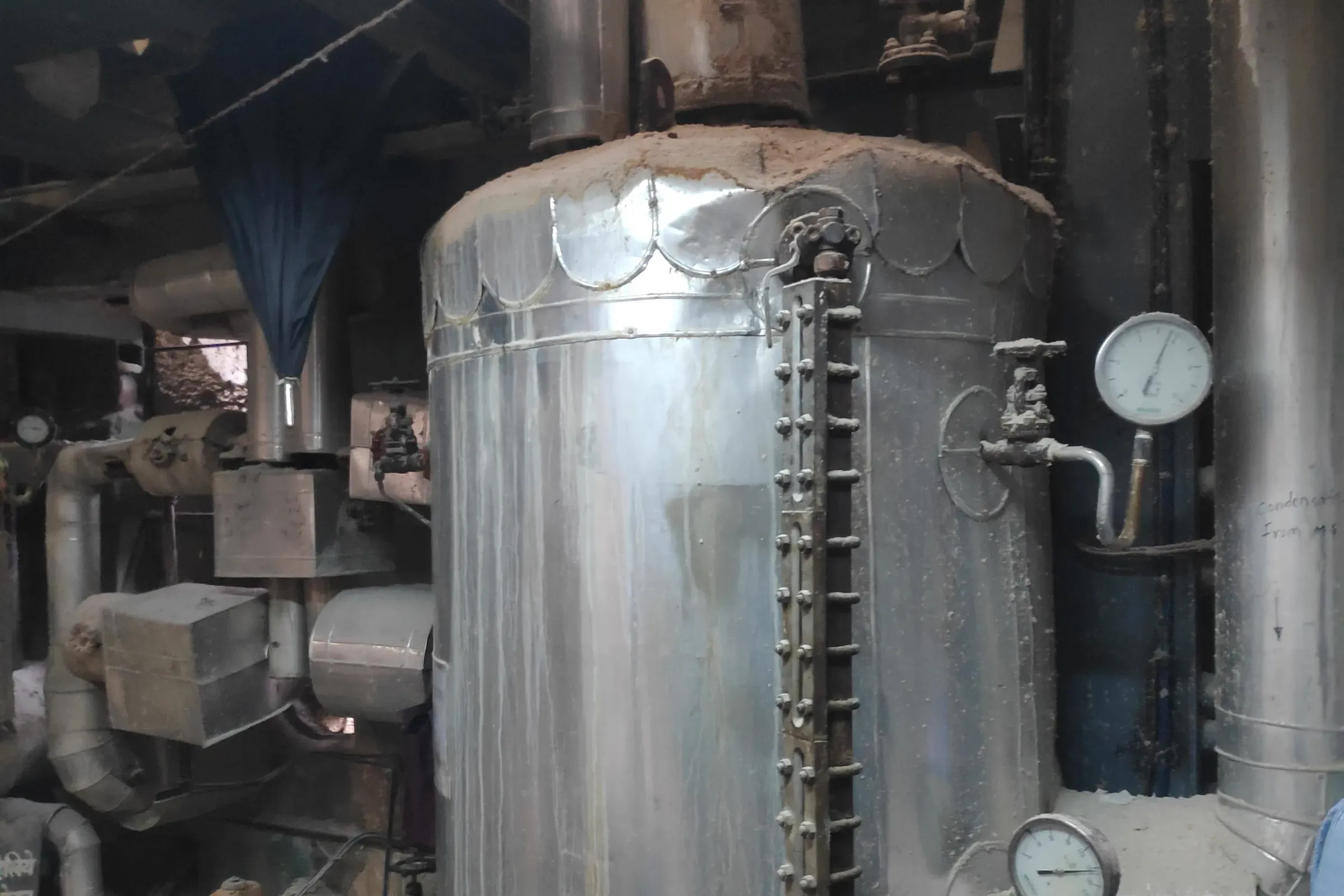
“Heat the feed tank to 95 °C and stop dosing oxygen scavenger.” The advice turns up in steam audit reports again and again. The first half is good advice. The second half is not, and the reason is physics that no open tank can get round.
One audit found feed water at 60 °C holding about 5 ppm of oxygen, and proposed heating it to 95 °C to reach about 2 ppm, “acceptable” with no scavenger. Another proposed 95 °C under temperature control, with the scavenger “deleted or substantially reduced”. Both had the direction right. Neither had the endpoint right.
1. What an open tank can do
Water holds less dissolved gas as it gets hotter, and near boiling the water vapour above the surface pushes the air away. In a tank open to the atmosphere, air-saturated water holds roughly:
| Feed tank temperature | Dissolved oxygen, about |
|---|---|
| 55–60 °C | 5 ppm |
| 70 °C | 4 ppm |
| 90 °C | under 2 ppm |
| 95 °C | under 1 ppm |
| 100 °C | zero, only at the boil |
So taking a tank from 60 to 95 °C removes four fifths or more of the oxygen, before any chemical. That is why the hot feed tank is the right first step on every small boiler. The reports’ “2 ppm at 95 °C” is a pessimistic figure; a well-vented, well-mixed tank does better.
2. What it cannot do
“Under 1 ppm” sounds small until you compare it. A pressurised deaerator, steam-scrubbed at about 0.2 bar g and 105 °C, is judged at about 7 parts per billion at the feed pump suction. One ppm is 1,000 ppb. An open tank at 95 °C leaves roughly a hundred times what a working deaerator leaves; at the reports’ 2 ppm, nearer three hundred. In a hot boiler that oxygen pits steel (the lesson on feedwater and deaeration explains how).
So the scavenger is trimmed, not deleted. Dose it on the residual oxygen at the tank’s real temperature, check it by residual testing, and take the oxygen limit from the boiler maker and the water-treatment supplier, not from an audit report.
An open tank also cannot pass 100 °C. One offer for a new plant listed “deaerated water” at 105 and 120 °C from a tank with an air vent and a vacuum breaker, which is impossible. The same offer said dissolved oxygen “is proportional to temperature”, the reverse of the truth. Check the physics in any feed-water offer.
3. The scavenger shows up in your blowdown
Sulphite-type scavengers are non-volatile: what they add stays in the boiler as dissolved solids. One audit had DM feed at 4.5 ppm TDS, no deaeration and 6 ppm of oxygen at 55–60 °C. If the scavenger was sodium sulphite (the report did not say), it adds about 47 ppm to the feed. Feed TDS goes to about 52 ppm, and the blowdown the boiler needs goes from about 0.15 % to about 1.8 % of its steam. A blowdown saving claimed on the 4.5 ppm figure roughly halves.
The colder the tank, the more scavenger it needs, and the more blowdown that scavenger costs. What your TDS log says about blowdown shows how to work that balance on your own boiler.
4. Where the 95 °C comes from decides the fuel saving
- Live steam is not a saving. One plant held its tank at 90–95 °C with about 419 kg/h of live steam, because only about a tenth of its condensate came back. The boiler heats that water either way. It becomes a saving only when condensate, flash or blowdown heat replaces the live steam.
- Insulate first. One uninsulated 5 kL feed tank lost about 9,290 kcal/h. Heated to 95 °C without insulation, the loss would have been about 16,750 kcal/h, nearly double.
- Measure it. One report said the tank was held at 90 °C. The thermometer read 28.3 °C throughout the test.
- Count the capacity. Hotter feed leaves more of the boiler’s heat for steam. A 4,000 kg/h “from and at 100 °C” boiler at 7 bar g makes about 3,595 kg/h net on 60 °C feed and about 3,818 kg/h on 95 °C feed, some 6 % more. That can decide whether one boiler carries the peak.
A hot tank also needs static head over the feed pump, or the pump cavitates on the hottest days.
5. When a deaerator pays
For a small shell boiler with good condensate return, a hot, vented, insulated tank at 85–95 °C with a trimmed scavenger is usually the right answer. A pressurised deaerator earns its cost when:
- ppm-level oxygen is not acceptable for the boiler, as on water-tube or higher-pressure plant;
- make-up is high, so the oxygen load, the scavenger bill and the blowdown it drives are all large;
- recovered heat has nowhere to go. An open tank can absorb at most feed × (100 − make-up °C) kcal/h. Once condensate, flash and blowdown flash bring more than that, the tank reaches 100 °C and the surplus vents. A deaerator running above 100 °C is the next sink.
That last case is where recovered low-pressure steam finds a user. At a food factory, a condensate tank had stood open for 50 years, losing its steam at 0.1–0.2 bar g. It was closed, and a Jetomat now draws that steam into the deaerator, held at 0.25 bar g, saving about Rs 10.6 lakh a year as reported. How the ejector is sized and controlled for a deaerator is in feedwater heating with ejectors.
What we need from you
Send us your feed tank temperature, measured at the pump suction across a day, the make-up flow and temperature and condensate return, the boiler type, pressure and steam load, the scavenger chemical and daily dose with any dissolved-oxygen test, your feed and boiler TDS, and any flash or condensate streams that end at the tank. We will tell you whether a hot tank is enough or a deaerator would pay.
FAQ
Can a well-run open feed tank replace the scavenger completely?
No. Even at 95 °C, water open to the air holds roughly 1 ppm of oxygen, about a hundred times the 7 parts per billion a pressurised deaerator is judged at. Heating cuts the dose; residual testing sets what is left.
Does heating the feed tank with live steam save fuel?
Not by itself. The boiler heats the water either way. It saves fuel only when condensate, flash or blowdown heat replaces the live steam, and the tank should be insulated before it is run hotter.
When is a pressurised deaerator worth it on a shell boiler?
When ppm-level oxygen is not acceptable for the boiler, when make-up is high, or when recovered heat would push an open tank to 100 °C so that flash vents. Otherwise a hot, vented, insulated tank with a trimmed scavenger is usually enough.
Where to go next