Seven Steam Audit Findings You Can Check on Your Own Plant This Week
Cold feed water, drained condensate, vented flash, leaks, blowdown by the clock, a bypassed pressure-reducing station and passing traps: the seven findings steam audits keep turning up, and how to check each one yourself.
On this page
- 1. The feed water is cold
- 2. The condensate goes to drain
- 3. Flash steam goes up the vent
- 4. Steam leaks, including the ones nobody counts
- 5. Blowdown by the clock, not by the water
- 6. The pressure-reducing station is on bypass
- 7. Traps that pass, or never get tested
- What to do with what you find
- What we need from you
Read enough steam audit reports and the same findings come round again and again. Different industries, different boilers, different decades, and still the same seven losses. You can check every one of them on your own plant this week, with an infrared thermometer and an hour’s walk.
This is not a substitute for an audit. It is a way to know, before you call anyone, whether your plant has the usual losses and roughly where they are.
1. The feed water is cold
What to check: put an infrared thermometer on the feed tank, or on the pipe at the feed pump suction. Note whether the tank is open, uninsulated or fed from a pit.
What you often find: feed water at 40 to 60 °C. One plant had it there because its make-up came from returned cooling water. Another fed its boiler at 60 °C instead of 80 °C because the condensate collected in an open pit first.
Why it costs: as a rule of thumb, near 10 bar and when the heat comes from recovered condensate or flash, every 6 °C of feed temperature is about 1 % of fuel. (Heating the tank with live steam does not count: that only moves boiler heat around.) More on this in feedwater and deaeration.
2. The condensate goes to drain
What to check: look for steaming drains and pits. Then compare the boiler make-up meter with the steam you make. Make-up is roughly the condensate that does not come back, plus blowdown, plus leaks.
What you often find: in one plant only about 12 % of the condensate came back. In another, none was collected at all; every user drained to waste.
Why it costs: condensate carries about a quarter of the fuel heat that made the steam, plus treated water and chemicals. The lesson on condensate recovery has the full arithmetic.
3. Flash steam goes up the vent
What to check: look at the condensate tank vent and the drum vents. A plume is flash steam.
What you often find: condensate from 7 bar g flashes about 13 % of its mass to air at an open tank. Into a 3.5 bar g header, the same condensate gives only about 4.5 %. That difference matters: the flash you can recover depends on where you can put it, not just on how much you see. UPL’s Bharuch plant is a case where vented flash found a user every hour.
4. Steam leaks, including the ones nobody counts
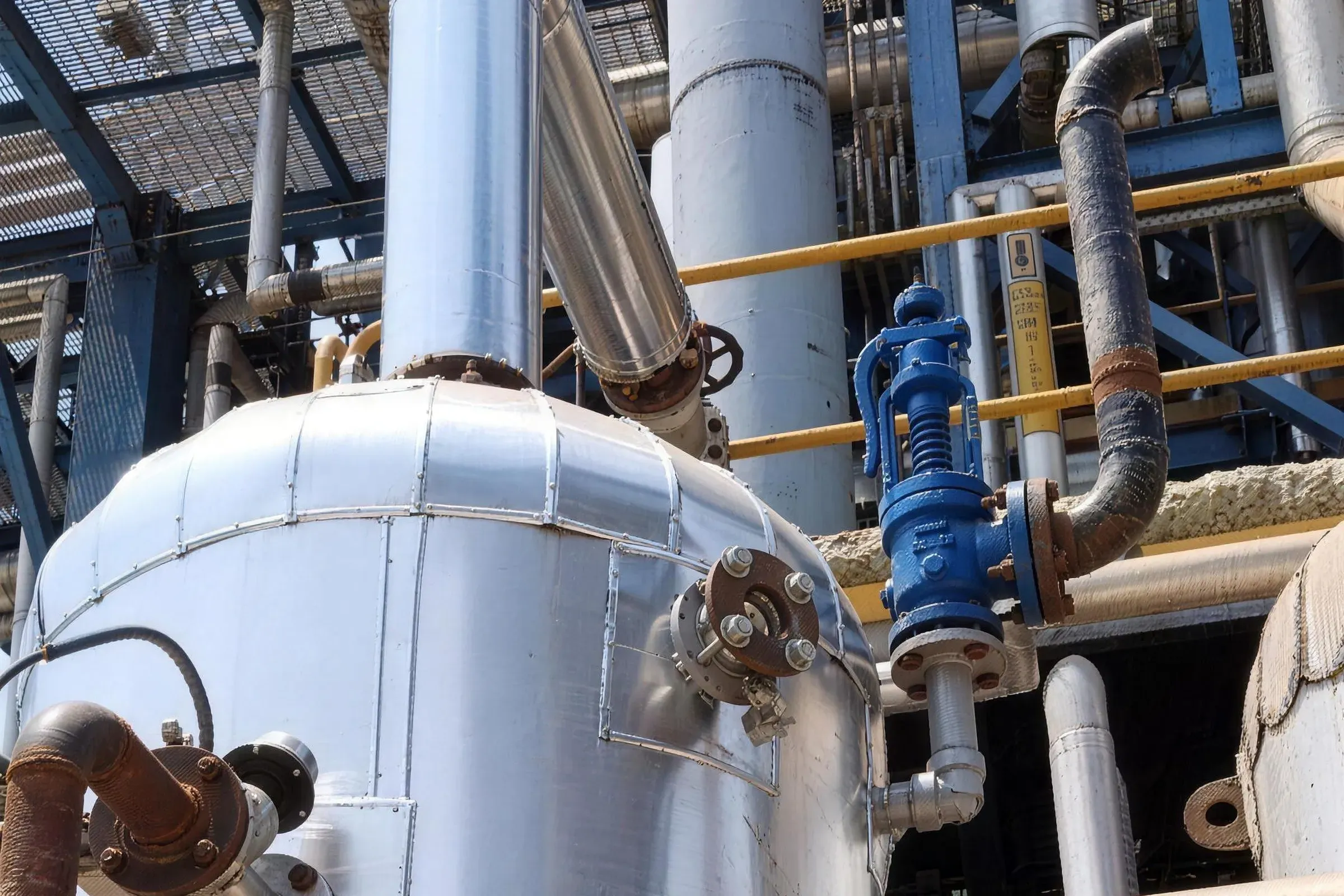
What to check: walk the plant at full production, by eye and by ear. Include trap bypass valves left cracked open and the glands and flanges at the pressure-reducing stations. Note where each leak is, at what pressure, and a rough size.
What you often find: one audit put leaks at 350 kg/h, about 15 % of the steam generated. Another found a trap bypass about 10 % open at 7 bar g. See what a steam leak costs.
5. Blowdown by the clock, not by the water
What to check: ask the boiler operator what TDS figure they blow down to. If the answer is “three minutes a shift” or “when it looks right”, that is the finding. If there is an automatic TDS controller, check that it reads what a lab test says.
What you often find: one plant blew down about 2,160 kg a day by the clock, where its water chemistry needed about 137 kg a day, on the audit’s own working. At another, an automatic controller read 410 ppm against an actual 2,800 ppm; none of the plant’s three controllers worked. Blowdown and TDS control explains how to set it.
6. The pressure-reducing station is on bypass
What to check: look at the bypass valve around each pressure-reducing station. Is it open, or cracked? What does the gauge downstream read, and does it move with load?
What you often find: at one plant the bypass was kept open all the time. Steam at about 12 bar went through it, and the pressure downstream was whatever pipe friction left. The audit’s own advice: on a survey, look at the bypass first. Pressure-reducing stations covers why this happens and how to fix it.
7. Traps that pass, or never get tested
What to check: take the temperature either side of a sample of traps, listen to them, and look at every bypass.
What you often find: in a trap population nobody manages, our eight steam wastes lesson puts 15 to 25 % failed. Treat a quick temperature check as a screen, not a verdict: one audit’s temperature check called a set of float traps tight, and a leak test on what was probably the same set found five of eight passing.
What to do with what you find
Start with the cheap ones. A bypass closed, blowdown set to a TDS figure, the worst leaks repaired: these cost little and pay back at once. Condensate return and flash recovery need engineering, so put a size on them first. The feed tank temperature and the make-up meter tell you roughly how big they are.
What we need from you
If you want a second view on what you found, send us your feed tank temperature, the make-up water and steam figures for a typical month, the pressure at each pressure-reducing station and whether its bypass is open, and a photo of the condensate tank vent. We will tell you which of the seven is worth chasing first.
FAQ
Do I need instruments for these checks?
An infrared thermometer covers most of them. The rest are questions to ask, valves to look at, and two meter readings you probably already log.
Which finding should I fix first?
Usually the one that costs least to fix: a bypass left open, blowdown set by the clock, a leak. Condensate and flash recovery need more engineering, so work out their size first.
Does this replace a proper audit?
No. It tells you whether an audit is worth doing and where it should look first. A proper audit puts numbers on each loss and checks them against the fuel bill.