Flash Steam: Flash Vessel, Jetomat or Vent Condenser? Start with Where It Will Go
Three ways to stop a flash-steam vent, and each needs its own sink: a steam user at the flash pressure, a header that takes the motive steam too, or water that runs whenever the vent does.
On this page
- First: is the flash really there at the pressure you want?
- Question 1: is there a steam user at or below the flash pressure? Flash vessel
- Question 2: is the only steam user above the flash pressure? Jetomat
- Question 3: no steam user at all, but cold water that runs with the vent? Vent condenser
- If none of the three fits
- What we need from you
A condensate tank vents a plume. Three pieces of equipment can stop it: a flash vessel, a Jetomat or a vent condenser. Which one fits has little to do with the plume and everything to do with where the recovered steam, or its heat, will go.
Each route needs a different sink. A flash vessel needs a steam user at the flash pressure. A Jetomat needs a header that takes its motive steam as well as the flash. A vent condenser needs cold water. Ask the questions below in order. (To put a rupee figure on the plume first, see pricing your condensate tank’s flash.)
First: is the flash really there at the pressure you want?
The flash fraction depends on both ends: the pressure the condensate comes from, and the pressure it flashes into. From 7 bar g, about 13 % of the condensate flashes to atmosphere. Into a 1 bar g vessel it is about 10 %, and into a 3.5 bar g header only about 4.5 % (steam tables).
Two checks before any sizing:
- Take the pressure at the trap inlet, not the supply pressure. Condensate only flashes into a vessel held below its own saturation pressure. Users whose traps sit at 3 bar g give nothing to a 3.5 bar g vessel. Five ten-minute checks shows how an infrared thermometer settles it.
- Measure the condensate temperature. One flash vessel and pump were designed for 1,000 kg/h of condensate at 143–155 °C. After the plant lowered its dryer pressures, about 300 kg/h arrived at 90–105 °C, below boiling at the vessel. The flash recovered was negligible.
And if a vent blows far harder than the flash fraction allows, it is mostly live steam through failed traps. Fix the traps before you size anything.
Question 1: is there a steam user at or below the flash pressure? Flash vessel
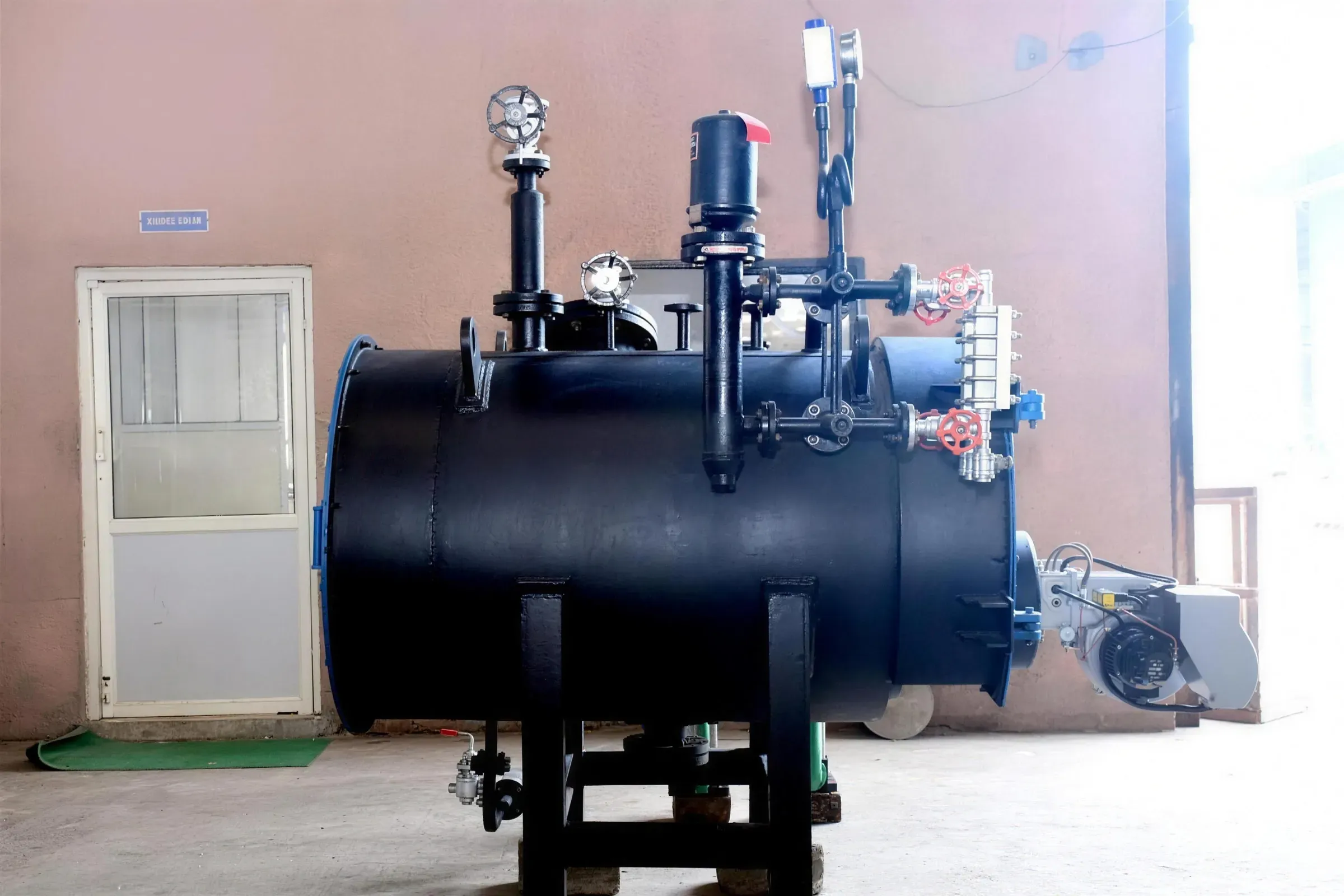
The simplest answer: a vessel, a trap and a pipe, with no motive steam. It fits when three things hold:
- The user takes at least the flash, every hour it runs. If the flash is larger than the demand, the vessel pressure climbs until the safety valve lifts.
- The user’s temperature is below the flash’s saturation temperature. Flash at 0.5 bar g is at about 111 °C. One audit proposed it for press dies that work at 150–155 °C. It could only pre-heat them; live steam still had to finish the job.
- A make-up supply covers the rest, sized for the user’s whole demand. Flash falls with the condensate load. In one design the flash met 86 % of a hot-water exchanger’s 665 kg/h at full condensate load, but only about 233 kg/h at the lower load. The make-up reducing station was sized for the full 665 kg/h.
Set the vessel pressure from the user, not from the plume.
Question 2: is the only steam user above the flash pressure? Jetomat
A Jetomat takes the flash at low pressure, which keeps the larger fraction, and uses high-pressure motive steam to deliver the mix into a higher header.
Its sink is larger than the flash, because the Jetomat delivers its motive steam too. At a process plant in South Korea, 4,700 kg/h of 12.5 bar g motive steam lifts 1,100 kg/h of drum flash from 0.2 bar g into the 1.56 bar g LP header. That header has to take about 5,800 kg/h, every hour. It does: the motive steam is steam the header was taking from the main anyway, and the flash replaces part of it.
A smaller lift needs less motive steam. At an industrial laundry in Spain, a flash vessel releases the flash of two 10.5 bar g processes at 2.5 bar g, not at atmosphere, and a Jetomat lifts it to the 4 bar g user. Boiler steam to that user fell from 326 to 208 kg/h. Flashing at 2.5 bar g gives up some flash, but the lift is small. The Jetomat flash post shows how fast the motive steam grows with the lift.
The variable nozzle follows the flash as the load moves, so the header pressure holds. Condition: a header that takes motive plus flash every hour, a motive main well above it, and today a reducing station between them.
Question 3: no steam user at all, but cold water that runs with the vent? Vent condenser
A vent condenser condenses the flash into make-up or process water. It recovers heat and water, not steam at pressure. It also fits where the vent must stay open: a deaerator vent carries the stripped gases out, and our VentCon sits on it and condenses the steam that leaves with them.
Its sink is the water. About 540 kcal leaves each kilogram of flash as it condenses at atmospheric pressure. The water flow needed is the flash in kg/h × 540 ÷ the water’s temperature rise. Each 100 kg/h of flash needs about 1,350 kg/h of water warmed by 40 °C, every hour the vent runs.
Two lessons from past designs:
- The warm water must be used. A flash condenser on cooling water recovers the condensate and nothing else, unless the warmed water goes somewhere useful, such as the feed tank.
- Rate a shared condenser on the sum. One design sent the flash of two vessels, 753 kg/h, to a condenser rated 692 kg/h. It also switched the water on and off on temperature, which lets the pressure rise each time the water stops; a modulating valve avoids that.
If none of the three fits
Return the hot condensate to the feed tank or a pressurised deaerator, up to what the feed water can absorb, and fix the traps that blow live steam.
| What you find | Route | Its sink |
|---|---|---|
| A steam user at or below the flash pressure | Flash vessel | That user, plus make-up for the rest |
| Users only above the flash pressure, fed through a reducing station | Jetomat | A header that takes motive plus flash every hour |
| No steam user, cold water running with the vent | Vent condenser | The water: flash × 540 ÷ its temperature rise |
| None of these | Hot condensate return | The feed tank, up to its limit |
What we need from you
- The condensate flow and the trap-inlet pressure or temperature for each group of users.
- The pressure the tank or vessel runs at today.
- Every steam user’s pressure, hourly demand and running pattern.
- The motive main pressure and any header fed through a reducing station.
- Your cold water streams: make-up and process water, with flow and temperature.
FAQ
Can a flash vessel and a Jetomat work together?
Yes. In the Spanish laundry, a flash vessel releases the flash at 2.5 bar g and a Jetomat lifts it to the 4 bar g user. Flashing at a pressure above atmosphere keeps the lift small.
Why not flash everything to atmosphere and get the larger fraction?
Because no steam user takes steam at atmospheric pressure. Only a Jetomat or a vent condenser can use atmospheric flash, and each needs its own sink. A flash vessel feeding a 3.5 bar g header gets only about 4.5 % from 7 bar g condensate, against about 13 % to atmosphere.
How much water does a vent condenser need?
About 540 kcal leaves each kilogram of flash as it condenses, so the water flow is the flash in kg/h × 540 ÷ the water's temperature rise. 100 kg/h of flash needs about 1,350 kg/h of water warmed by 40 °C, every hour the vent runs, and the warm water must be used.