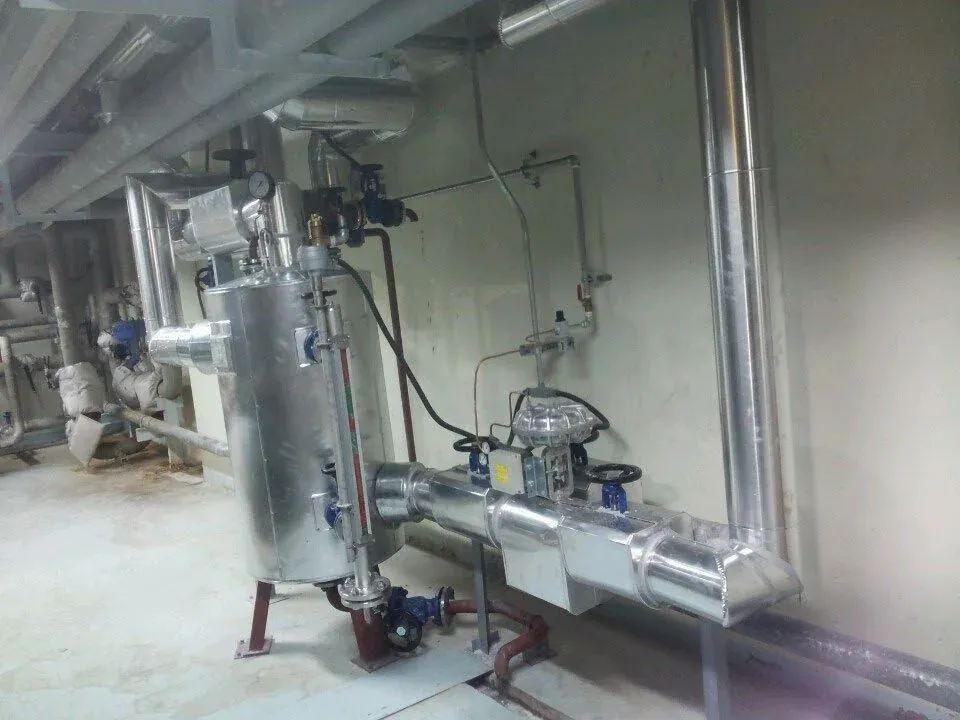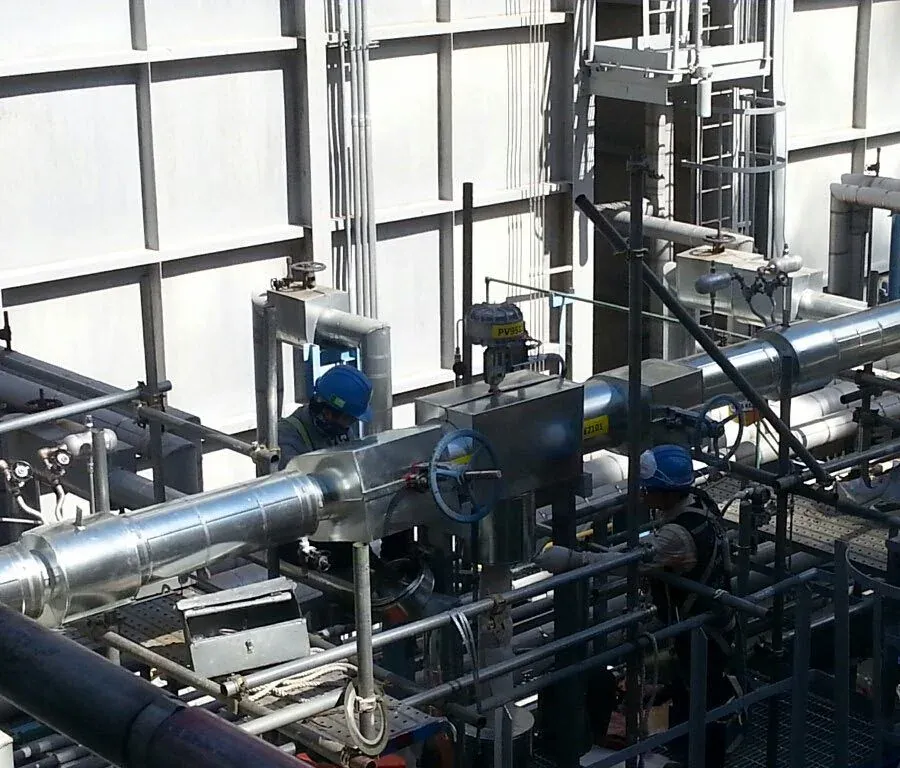
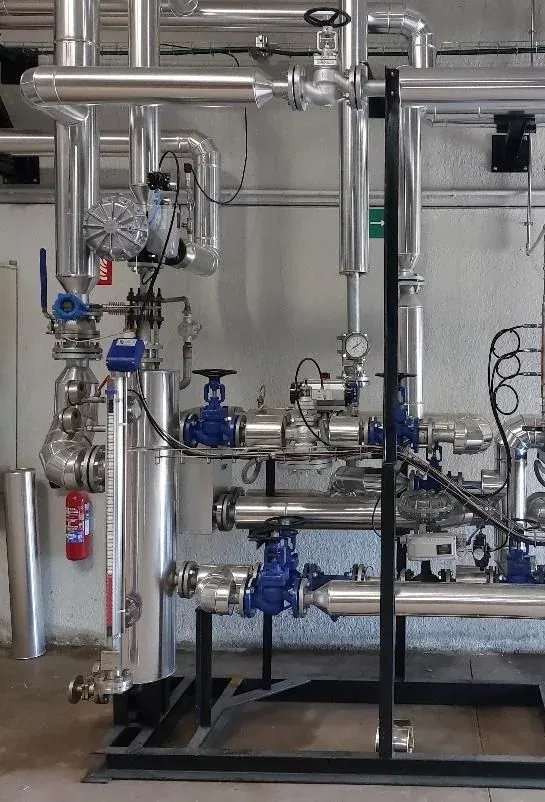
Original situation
A 4 bar g user took all its steam, 326 kg/h, from the boiler. Two processes at 10.5 bar g (652 and 559 kg/h of steam) released flash steam from their condensate, and nothing in the laundry used it.
Technical enhancement
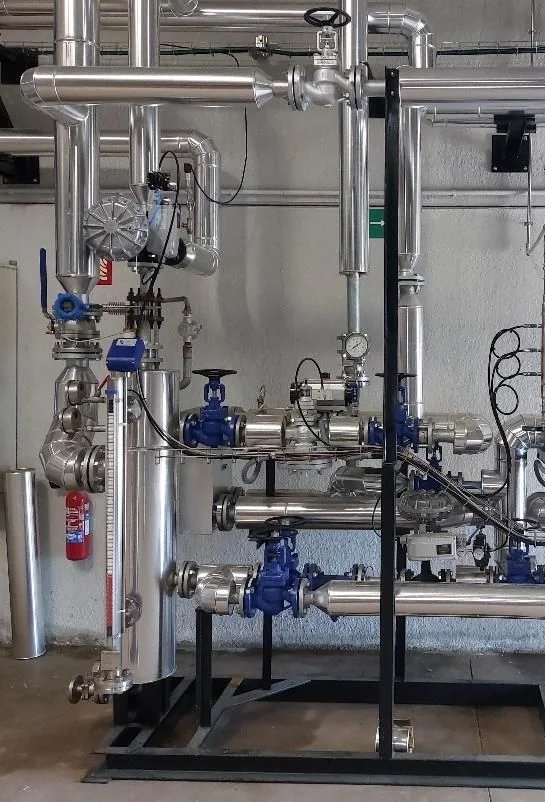
- A recompression skid went in. Its flash vessel takes the condensate of the two 10.5 bar g processes and releases flash steam at 2.5 bar g.
- A Jetomat® steam ejector (Baelz), driven by 10.5 bar g boiler steam, draws that flash steam and delivers the mix at 4 bar g to the low-pressure user.
- Level control on the flash vessel sends only hot water to the condensate return.
- The skid’s own panel runs it in automatic and totals the steam, energy and CO₂ saved. Started in May 2024.
The result
| Before | After (design) | |
|---|---|---|
| Boiler steam to the 4 bar g user | 326 kg/h | 208 kg/h (−36%) |
| Energy saved | — | 495 MWh a year |
| CO₂ | 475 t a year | 303 t a year (−173 t) |
- 230 MWh saved by 4 September 2024, four months after start-up, as logged on the skid’s panel (with 287 t of steam and 72 t of CO₂)
- About Rs 17.6 lakh a year at the design saving of 495 MWh, at the plant’s gas price
Why it works
Condensate leaving a 10.5 bar g process flashes when its pressure falls, here to steam at 2.5 bar g. That is below the 4 bar g the user needs, so on its own it is of no use. The Jetomat uses the pressure energy of the 10.5 bar g motive steam to entrain the flash steam and deliver the mix at 4 bar g. Its variable nozzle follows the flash steam actually available, so the user’s pressure holds while the boiler supplies only the difference.
Takeaway
High-pressure process plus low-pressure user is the classic Jetomat pair: the flash steam of one feeds the other, on one skid with its own meter.