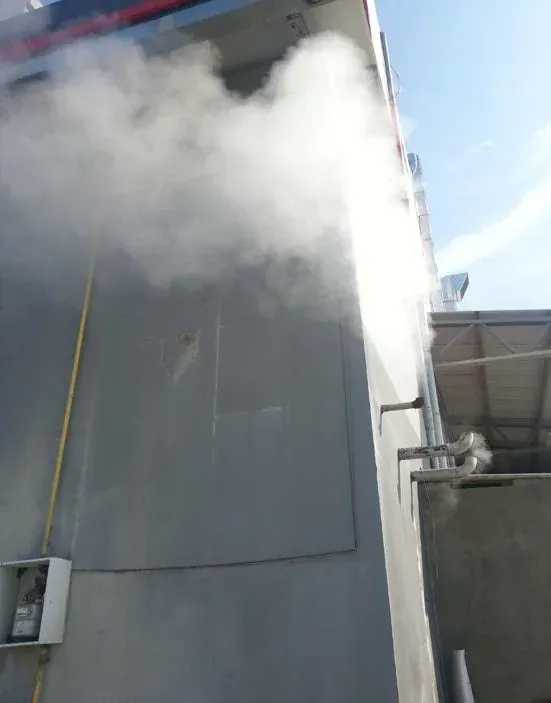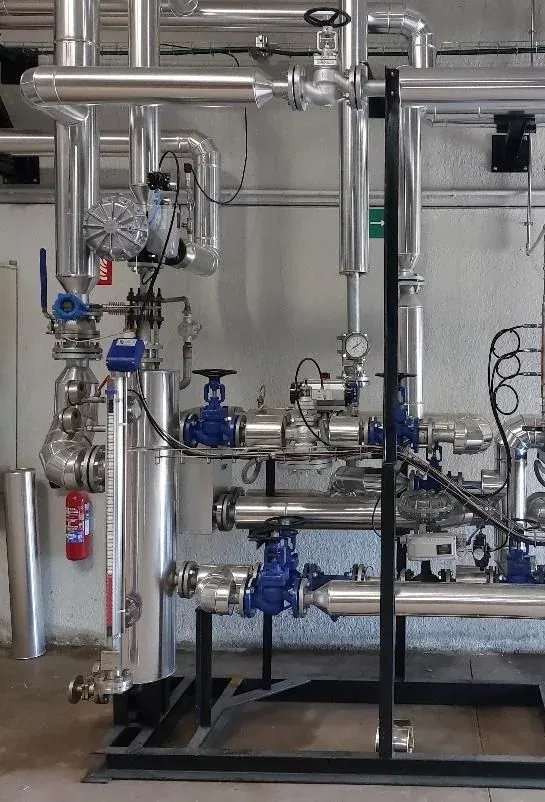
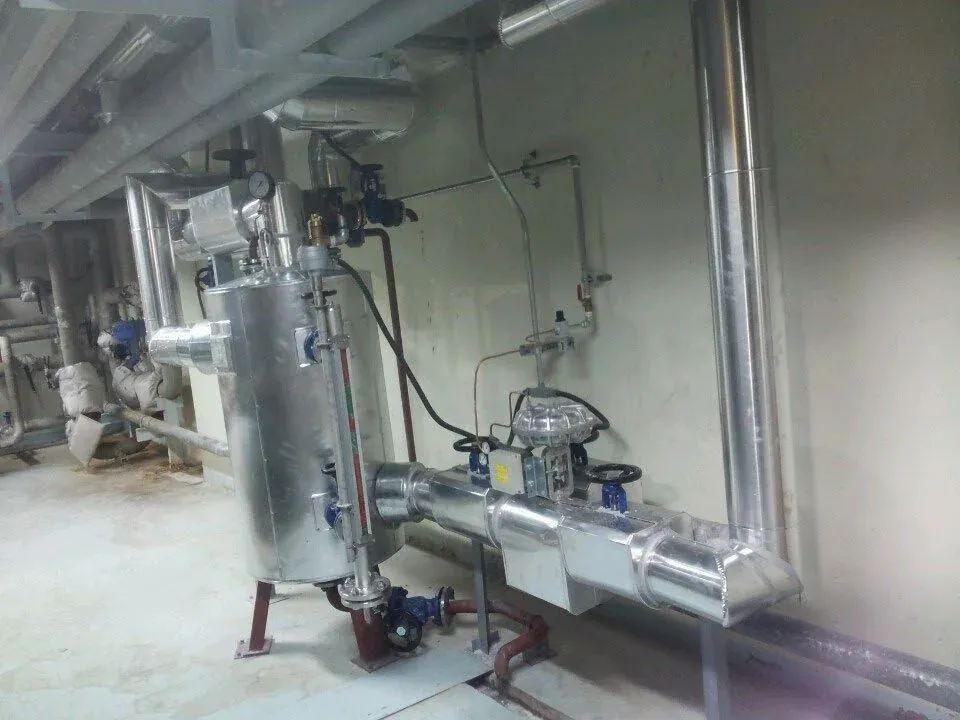
Original situation
Steam at 15.7 bar g was reduced to 6.9 bar g, metered, and fed to seven air-heating units on a coating line, each on its own control valve. Every unit’s two coil outlets drained through a steam trap station to the condensate return.
Technical enhancement
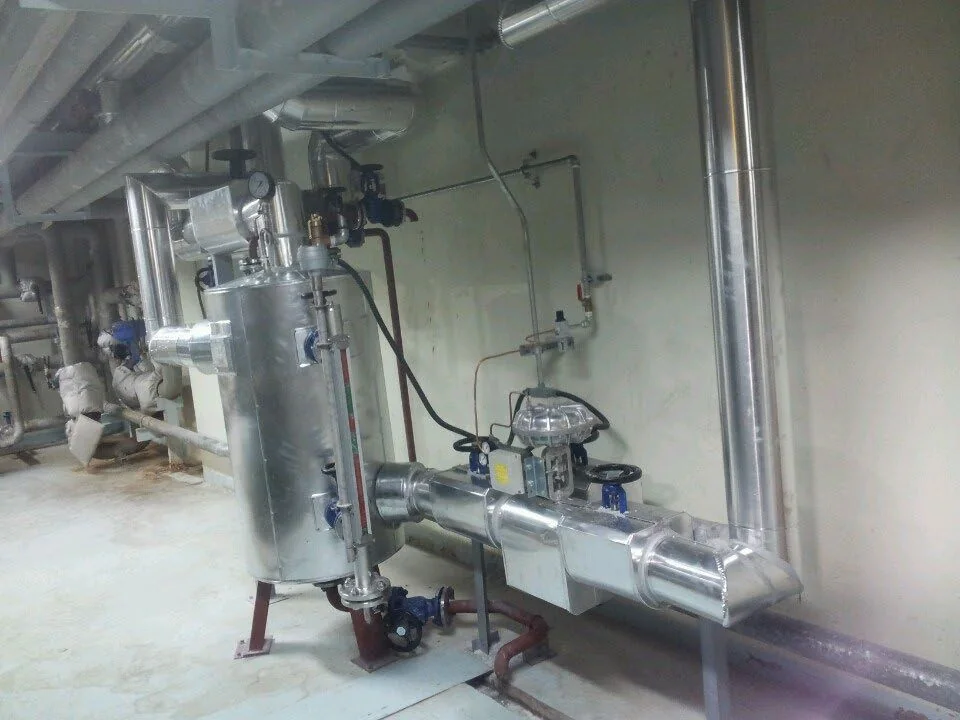
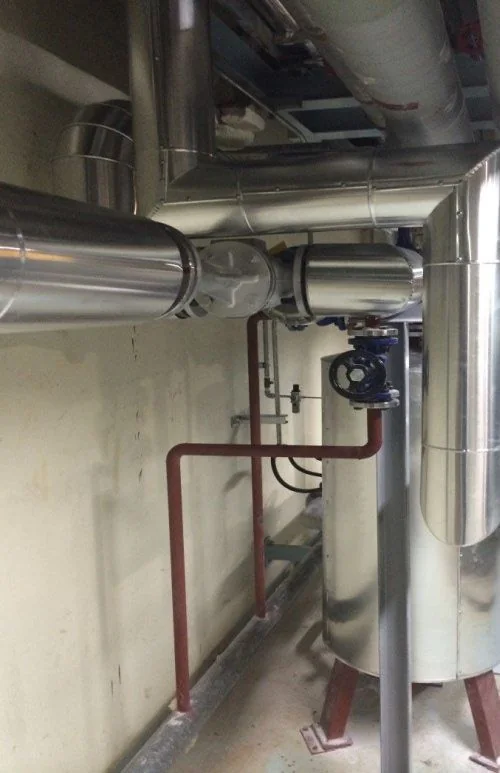
- A Jetomat® steam ejector (Baelz) on the metered 6.9 bar g supply now feeds the seven units.
- Each trap station has a bypass with a check valve: every coil drains straight to a new flash vessel.
- The flash vessel’s steam is the Jetomat’s suction; a level controller passes its condensate to the return.
- A pressure controller on the discharge sets the Jetomat’s actuator.
The result
| Same product grade | Before | After |
|---|---|---|
| Steam on the supply flowmeter | 900–910 kg/h | 840–850 kg/h (−6.6%) |
- 60 kg/h of steam saved, from a 60-day trend (November 2013 to January 2014)
- About Rs 18 lakh a year, as calculated by the plant on 60 kg/h, 24 hours, 360 days
Why it works
Behind a trap, an air-heating coil holds condensate back whenever the load changes, and the flooded part of the coil gives little heat to the air. With the coils draining freely to the flash vessel and the Jetomat returning the vessel’s steam to the supply, steam moves through every coil continuously and the heating surface stays clear. The variable nozzle, under pressure control, matches the motive steam to the load.
Takeaway
Air heaters are small users that add up. One Jetomat and one flash vessel serve a whole bank of them, measured on the plant’s own flowmeter.