From a Vent Plume to Rupees a Year: Price Your Condensate Tank's Flash in Four Steps
Put a rupee figure on the plume over your condensate tank from four numbers you already have, and the two checks that stop the figure from lying to you.
On this page
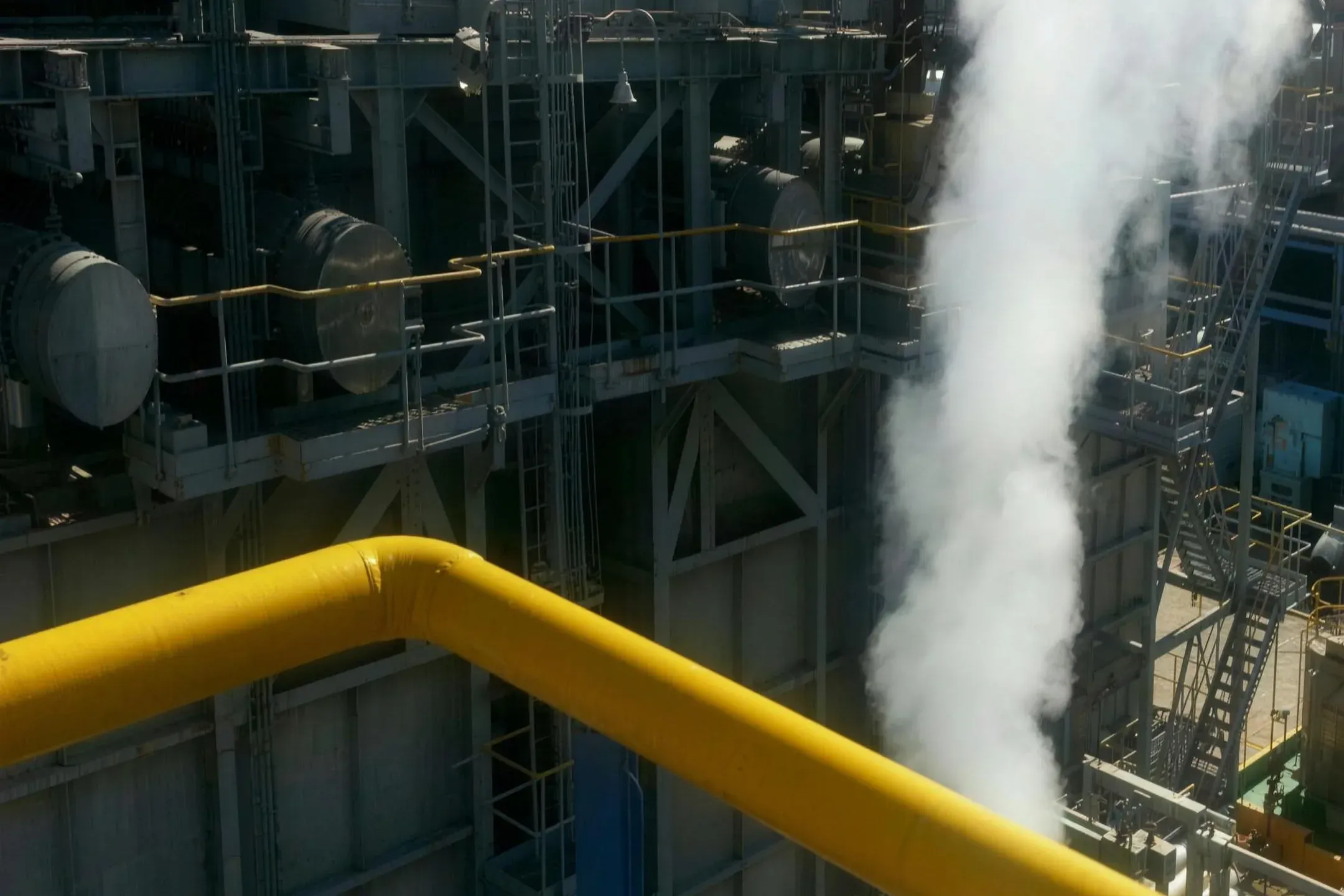
Every chemical plant has a plume over its condensate tank. Almost none has a number on it.
Without a number the plume is “a bit of vapour”, and it stays on the list for next year. With a number it is a line in the budget. You can work the number out yourself, from four figures the plant already has, in about ten minutes. The harder part is not letting the number fool you, and that is what this post is about.
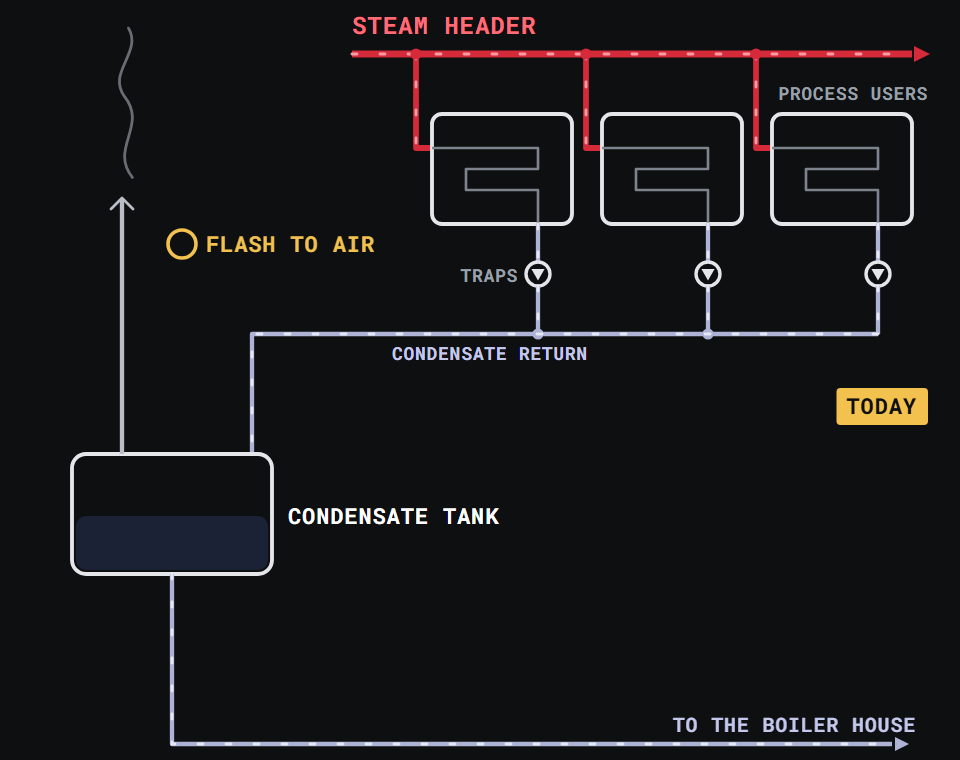
Step 1: how much condensate reaches the tank
Use a meter if there is one. If not, time the collection into the tank, or take the steam flow to the users that drain there: condensate in, steam out, kilogram for kilogram.
Step 2: the pressure the condensate really comes from
This is where most estimates go wrong. The flash fraction depends on the pressure at the trap inlet of each group of users, not on the header pressure and not on the boiler’s nameplate.
In one plant study, the condensate was taken at about 9 bar g, the supply pressure. The temperatures measured at the trap inlets were 145–156 °C, which puts the condensate nearer 3–5 bar g. The flash fell from 11.8 % to 7.4 % of the condensate. A temperature gun at the trap inlets is the cheapest correction you will ever make to a proposal.
The calculation itself is one line. The Academy lesson linked below has the steam-table values; the industrial standard behind every steam table is the IAPWS-IF97 formulation.
Flash fraction = (hf at the trap-inlet pressure − hf at the tank pressure) ÷ hfg at the tank pressure
Step 3: where the flash will go, not where it goes today
The second trap is quieter. The flash you can recover depends on the pressure it is recovered into.
From 7 bar g, about 13 % of the condensate flashes to an atmospheric tank. Into a 3.5 bar g low-pressure header, only about 4.5 % flashes. If an estimate prices the plume at 13 % and then recovers it with a flash vessel feeding the 3.5 bar g header, the saving is overstated about threefold.
That is why the route matters as much as the size:
- A flash vessel at header pressure keeps the smaller fraction, but sends it straight to work.
- A Jetomat takes the flash at close to tank pressure and lifts it into the header on motive steam, so it keeps most of the larger fraction. Where the low-pressure header is fed through a reducing valve today, the motive steam is steam the header was taking anyway.
- The boiler feed tank can take the flash and the hot condensate only up to the limit in Step 4’s second check.
Step 4: rupees a year
Rupees a year = flash in kg/h × running hours ÷ 1,000 × your steam cost in rupees per tonne
Your steam cost is the fuel bill divided by the steam raised. An example: 2,000 kg/h of condensate from users at 8 bar g at the trap inlet flashes about 14 % to an atmospheric tank, about 290 kg/h. Over 6,000 hours that is about 1,740 tonnes of steam a year:
| Your steam cost | The plume is worth |
|---|---|
| Rs 1,500 per tonne | about Rs 26 lakh a year |
| Rs 2,500 per tonne | about Rs 43 lakh a year |
| Rs 3,500 per tonne | about Rs 61 lakh a year |
The table shows how much the answer moves with your fuel, not what anyone saved. Put in your own figures.
Two checks before you believe your own number
1. Is there somewhere for the heat to go? Recovered heat is only worth something if a user takes it every hour the plume runs. If the plan is to send flash and condensate to an atmospheric boiler feed tank, the tank can absorb at most feed flow × (100 − make-up temperature) kcal/h. A 2,000 kg/h boiler on 30 °C make-up takes at most 1.4 lakh kcal/h. One plant study claimed about 2.5 times that ceiling. Past the ceiling, the feed tank simply becomes the next vent.
2. Is the same heat counted twice? The flash and the hot condensate left behind are two separate heats. Add each once, in order: what flashes, then what stays as water. A proposal that prices the flash, then prices the condensate return at the temperature before flashing, has paid for the same heat twice.
What your number tells you
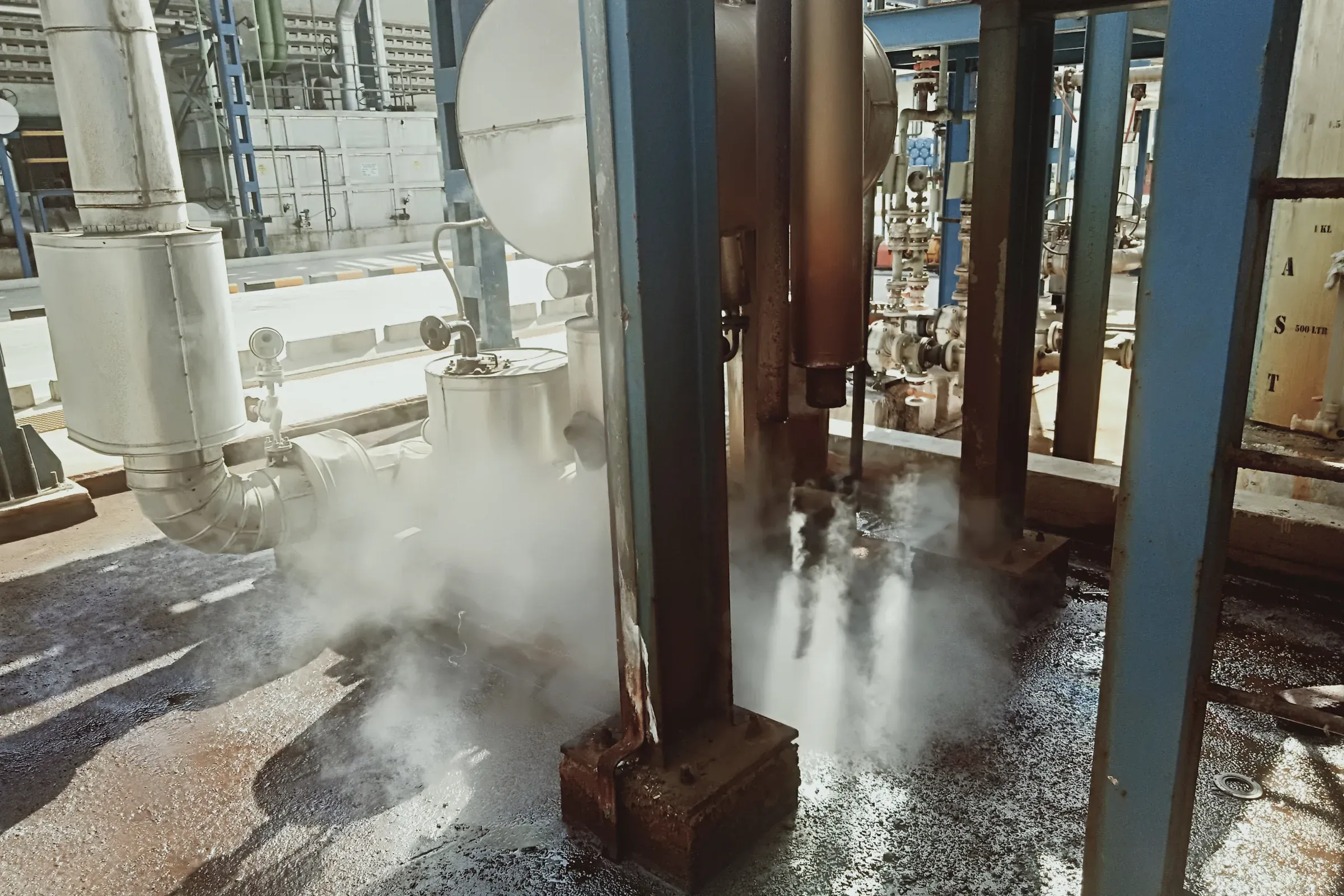
- A large figure and a low-pressure header fed by a reducing valve: lift the flash with a Jetomat. A process plant in Korea put 1,100 kg/h of drum flash at 0.2 bar g back into its LP header this way. (The photo at the top is that plant’s vent before the fix. Photo: Baelz installation partner.)
- A steady user at a fraction of a bar: a flash vessel feeding it directly.
- Only the boiler house to send it to: hot condensate return to a pressurised deaerator, after Check 1.
What we need from you
The condensate flow, the pressure or temperature at the trap inlets, the tank pressure and your steam cost per tonne. We will work the number with you, both checks included, and tell you which of the three answers fits.
FAQ
Which pressure do I use for the flash calculation?
The pressure at the trap inlet of each group of users, not the header pressure or the nameplate. If you only have temperatures, the saturation pressure at the trap-inlet temperature is a good first figure.
Why is the flash smaller if I recover it into a header?
Flash depends on where the condensate ends up. From 7 bar g about 13 % flashes to atmosphere, but only about 4.5 % flashes into a 3.5 bar g header.
Can all the recovered heat go to the boiler feed tank?
Only up to what the feed water can absorb: feed flow × (100 − make-up temperature in °C) kcal/h. Beyond that the feed tank vents too.