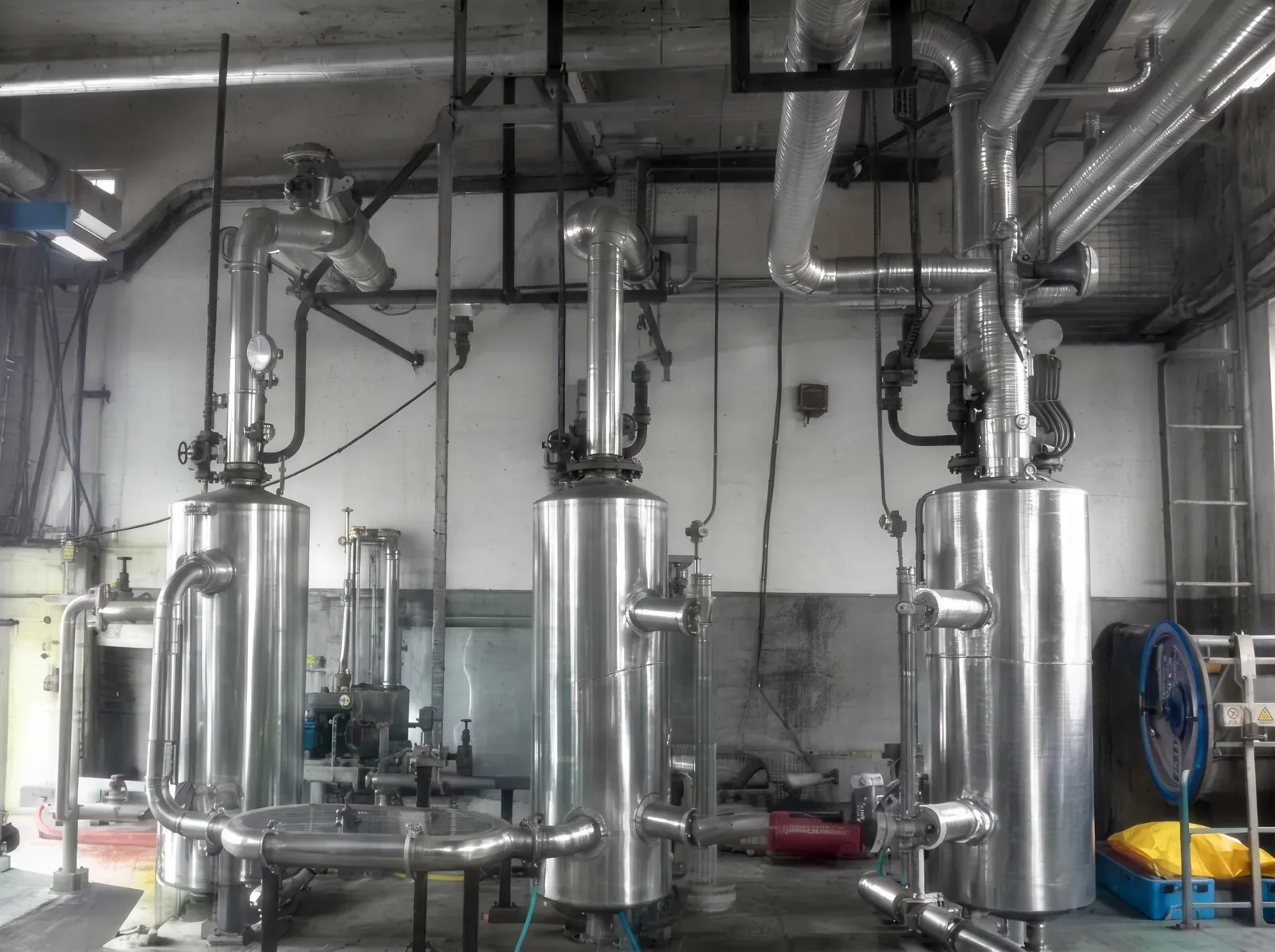
Where the steam goes
Curing presses take about four-fifths of a tyre plant’s steam, and three-fifths of the cure heat goes into the moulds. So the mould circuit is where a steam saving is won or lost.
On presses with a trap on every mould and the condensate going to an open tank, 15 to 25% of the steam heat sent to the moulds can be brought back: about 7 to 12% of the plant’s steam.
Six leaks we see in curing halls
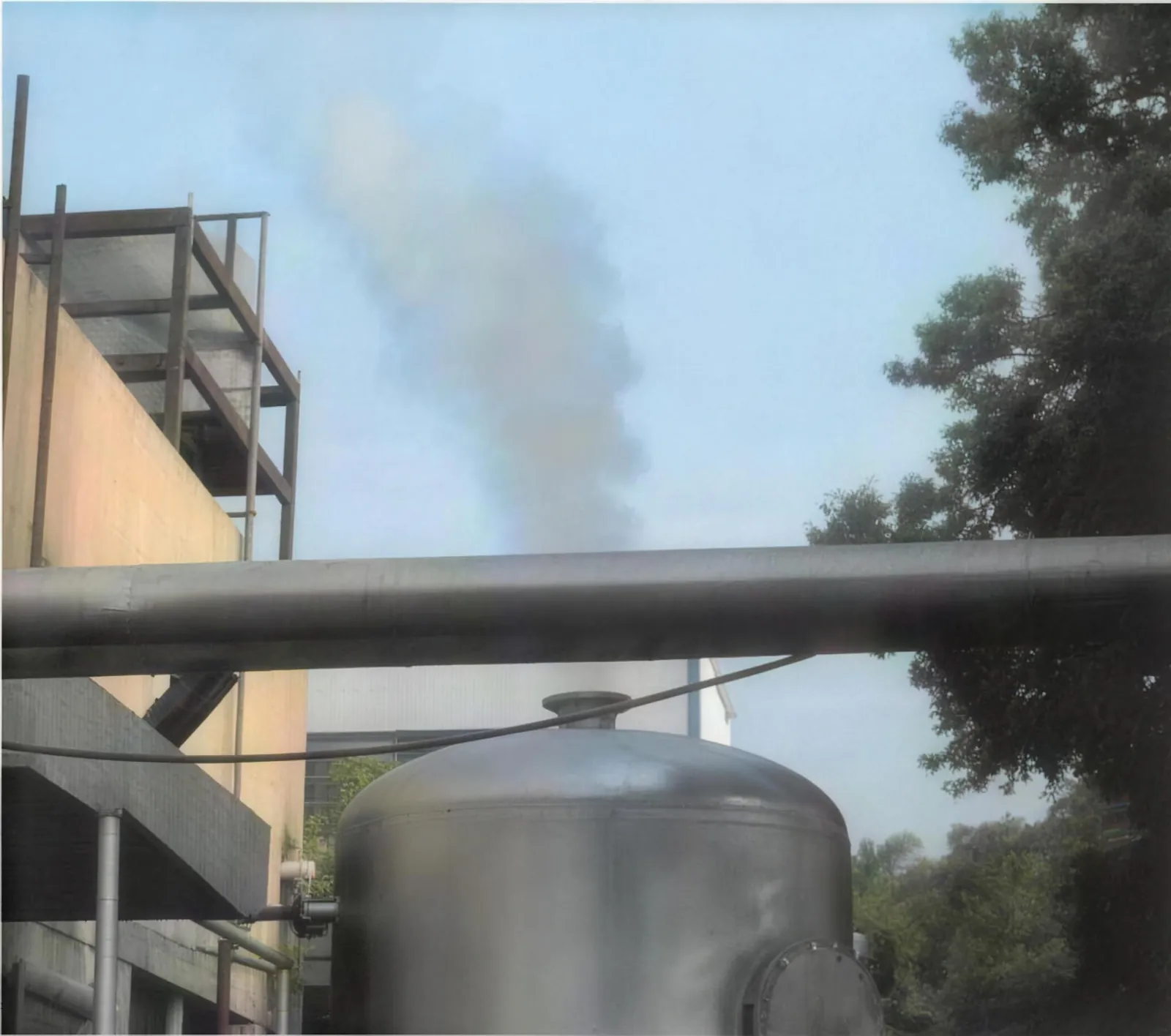
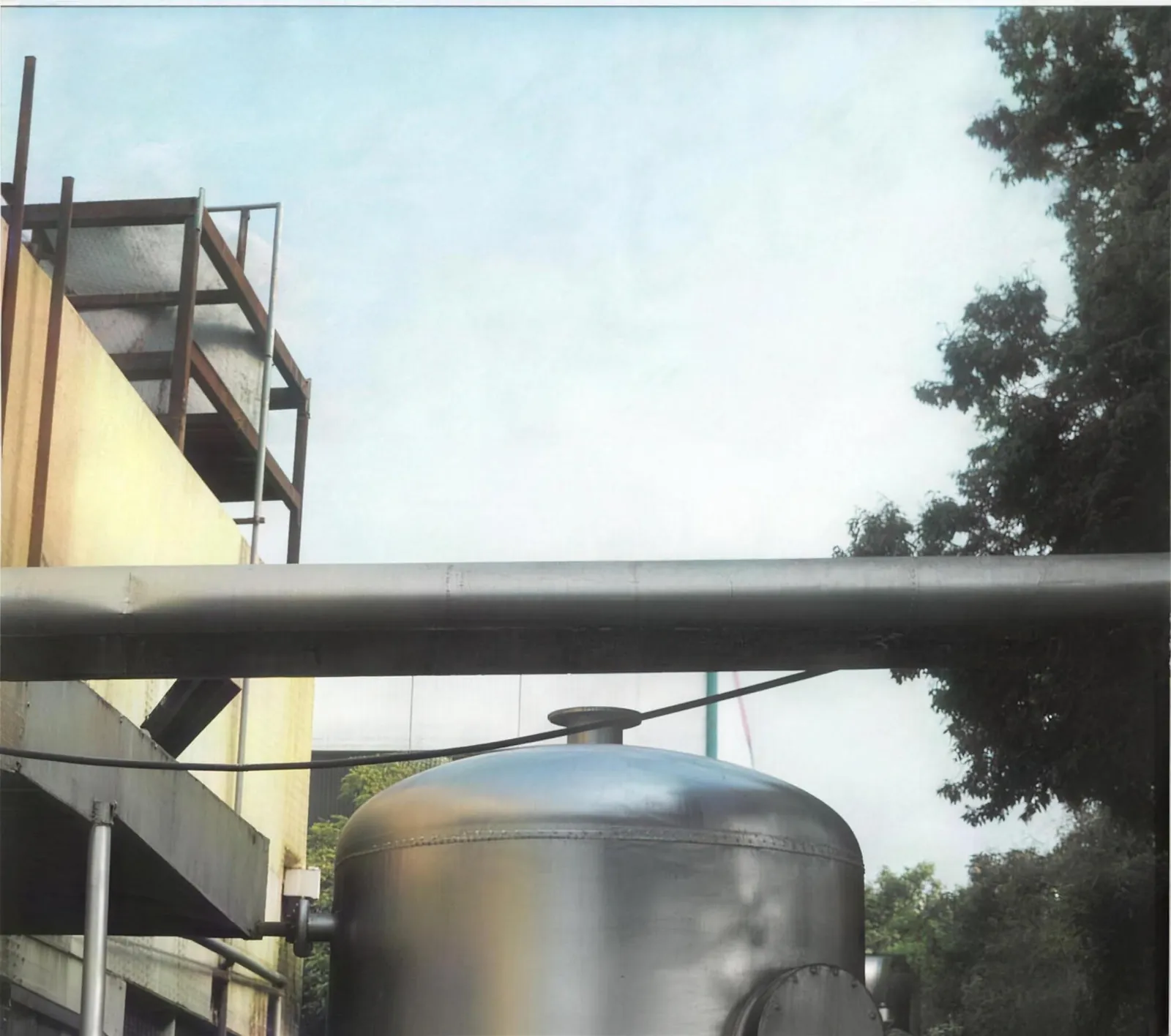
- A plume over the curing hall: mould and bladder condensate flash the moment they reach an open tank.
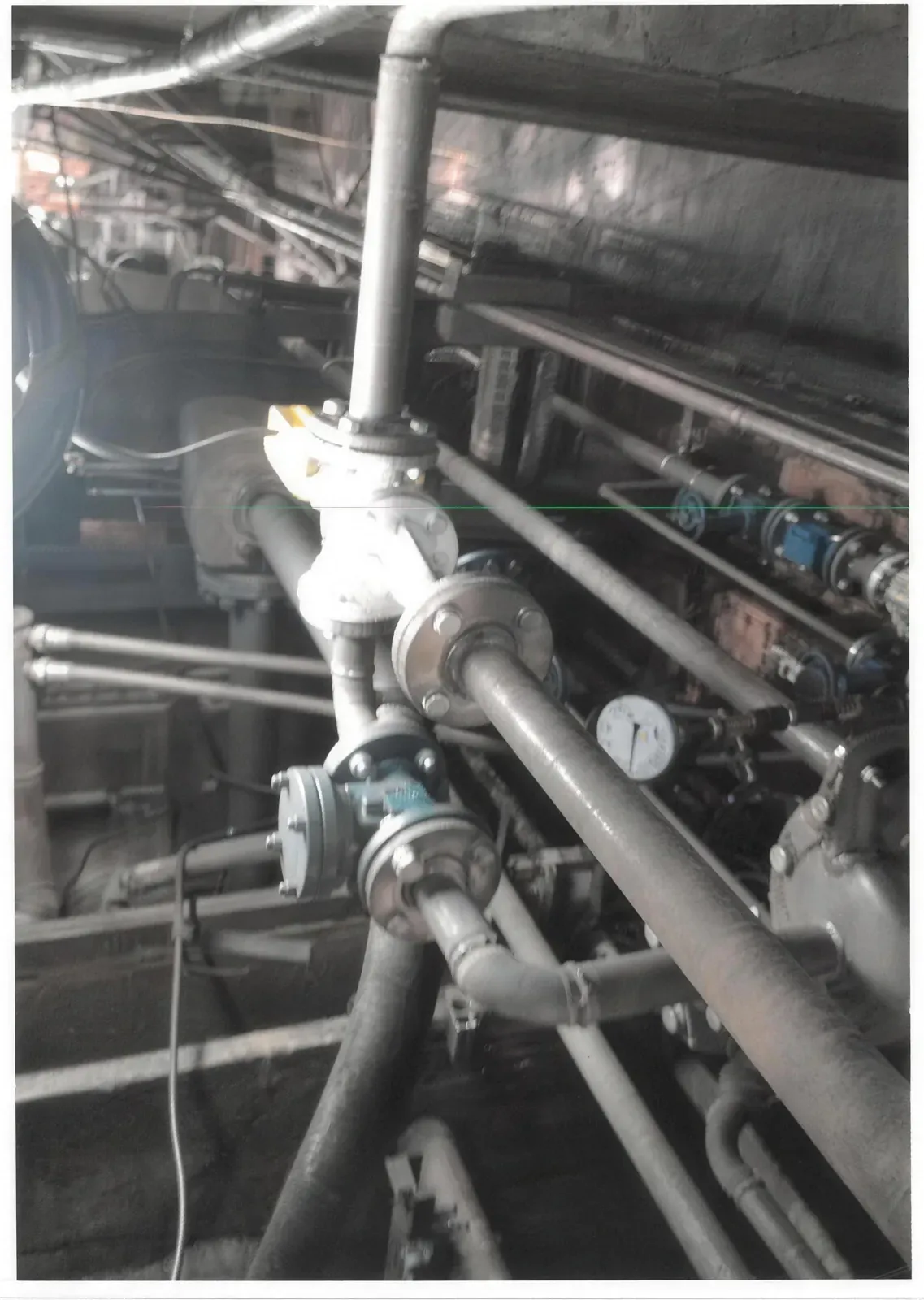
- Traps that pass and bleeds that never close: live steam goes through all shift.
- A trap bypass opened a turn when a platen runs cold, and left open.
- Monday warm-up: four to six tonnes of steel per press come up to temperature after every mould change and weekend.
- Wet steam at the press: water in the curing header adds to the bladder pool.
- Clean mould condensate sent to drain, out of fear of a worn bladder.
One Jetomat per bank of presses
High-pressure steam from the bladder header drives a variable-nozzle Jetomat. The bank supply feeds every press in parallel, and each press returns through its own valves into one falling return and the bank separator.
The separator’s vapour is the Jetomat’s suction, so the blow-through goes back to the moulds instead of through a trap. Only the condensate leaves, back to the boiler house, hot and closed.
In saturated steam, pressure is mould temperature: the bank holds ±0.05 bar at 7 bar g, a quarter of a kelvin at every mould. If the Jetomat ever fails, it fails closed and a bypass opens at the same setpoint, so curing continues.
Before
After · one Jetomat per bank
The bladder side and the boiler house
The bladder drain and exhaust go to closed recovery; the start-of-cure air purge stays vented, and a conductivity and turbidity guard diverts only a bad batch. One 3 bar g flash vessel serves 25 to 50 presses on the bladder side.
At the boiler house, the returning condensate and flash feed the deaerator, and blowdown heat recovery and valve and trap leak detection complete the loop.
Steam per cure, on a meter
A compensated steam meter on the bank and a totaliser on its return show the kg of steam behind every cure, so the saving is counted on your own meters.
What the full note covers
- The steam map of a tyre plant, from the mixer to the finished tyre
- Ten ways a curing hall pays for steam it never uses, and how to find each one
- The press-bank loop in detail, and how many presses go on one bank
- Mould and bladder pressure control: two loops, two jobs
- The per-press loop, the bladder Jetomat and the closed curing hall
- Recovering the bladder’s condensate safely
- Storing the steam surge at the boiler house and in the curing hall
- Metering every cure like a batch
- Which product goes where in a tyre plant
- Belts, hose, moulded goods and drums: the same principle wherever steam is blown through
- The questions a curing manager asks, with the answers
- From the press list to a defended saving, in six steps
The full industry note is shared with i-Kcal partners. To work it through for your own plant, talk to one of our engineers.