Original situation
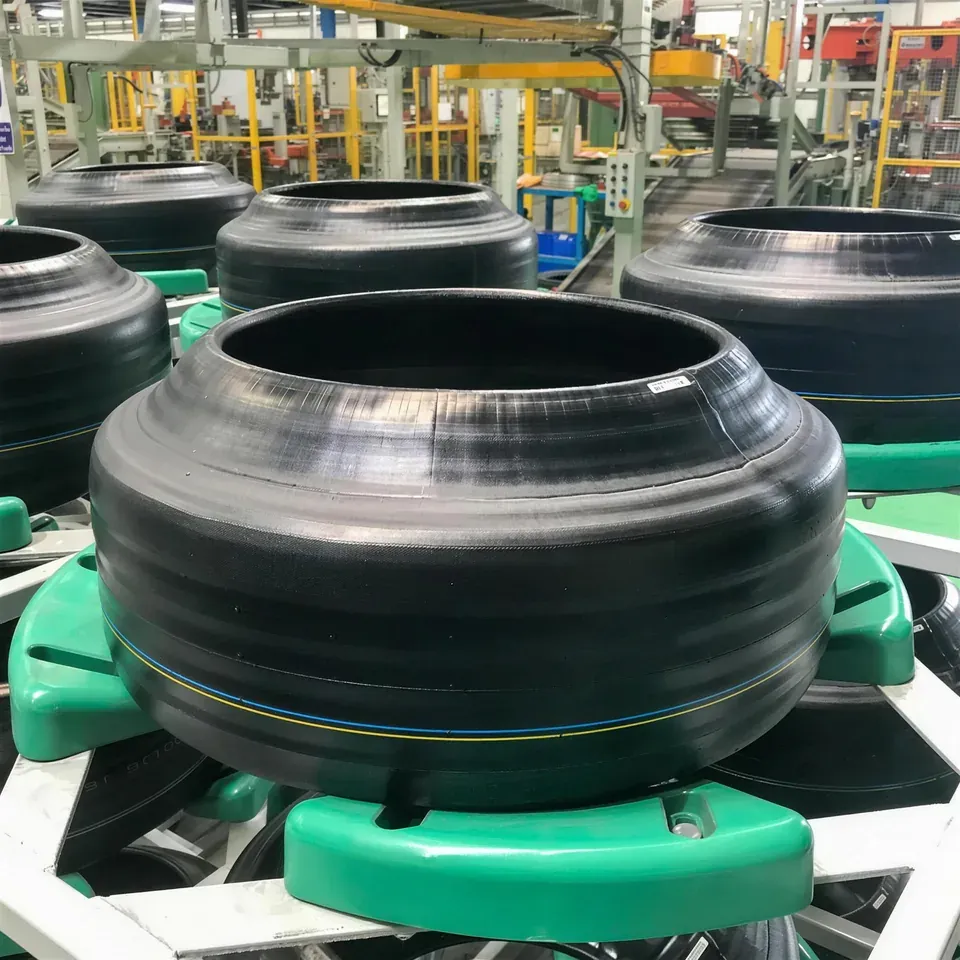
The curing presses took steam from a pressure-reducing station at three levels (18, 12 and 8 bar). Mould heating ran through a manual valve on each press, with a steam trap on every mould outlet into a common open drain header; the bladder steam and nitrogen purges and the main drain went to the same open header.
Technical enhancement
One controlled steam ejector at the head of the mould-heating header now feeds every press in parallel; every mould returns untrapped into one common header and one closed vessel, whose vapour is the ejector’s suction and whose condensate is pumped home under level control. On the bladder side each press has its own ejector, and the purge steam goes to closed recovery.
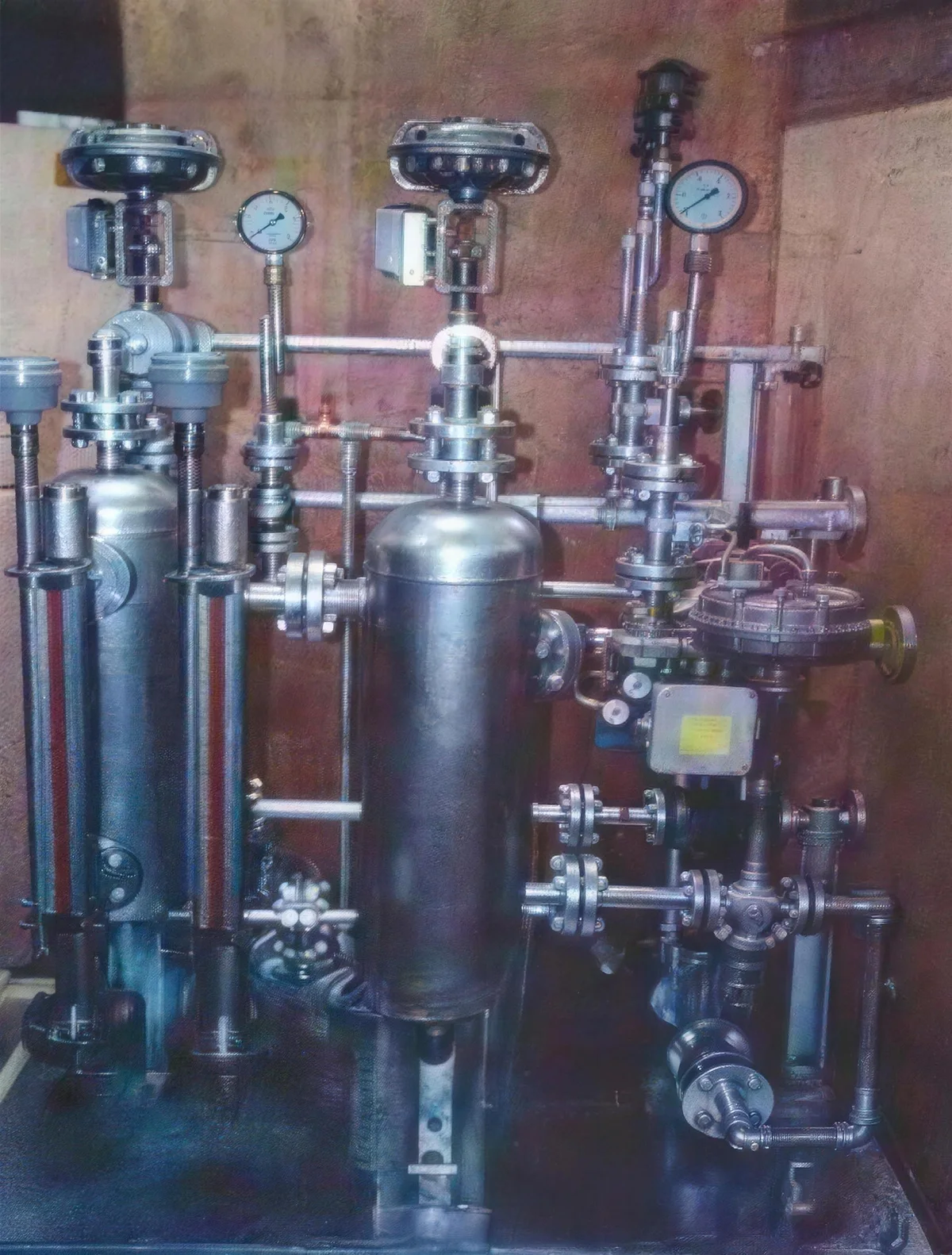
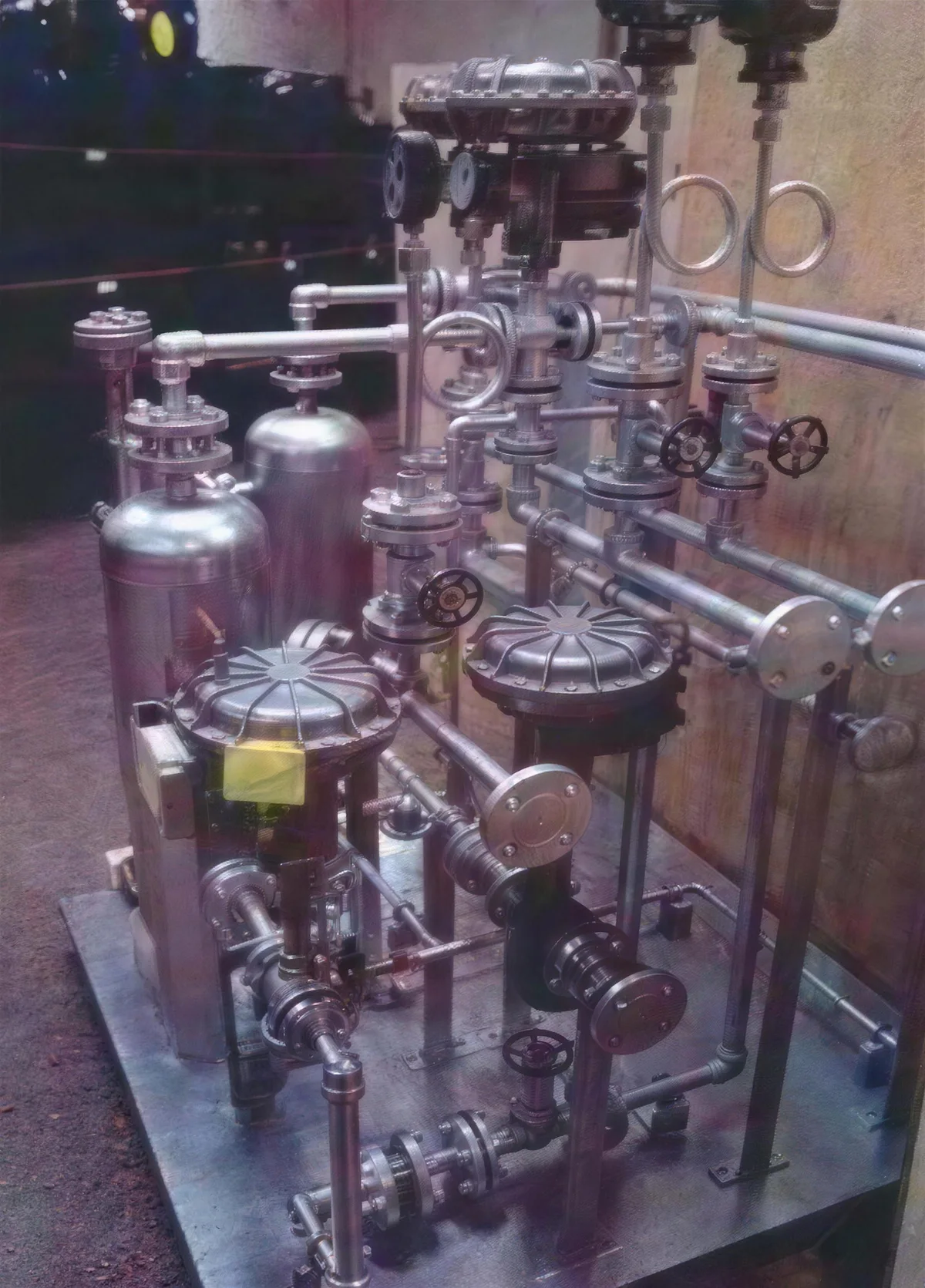
The same scheme was also designed for a European tyre maker as a pre-mounted skid, with the ejector on each press replacing the control valves on the mould and bladder circuits.
The result
- 18.7% more energy saved
- 5.1% higher productivity: a shorter heating-up phase, even steam distribution, and presses that open sooner because the vacuum is reduced faster
- 27.6% less fuel oil
- 28.3% less steam lost to atmosphere: a closed system with no exhaust vapour
- 15.8% less water
- Less corrosion, and a condensate return sized as a water pipe because nothing re-evaporates
Against a circulation-pump solution, the ejector solution is lower in investment and in life-cycle cost.