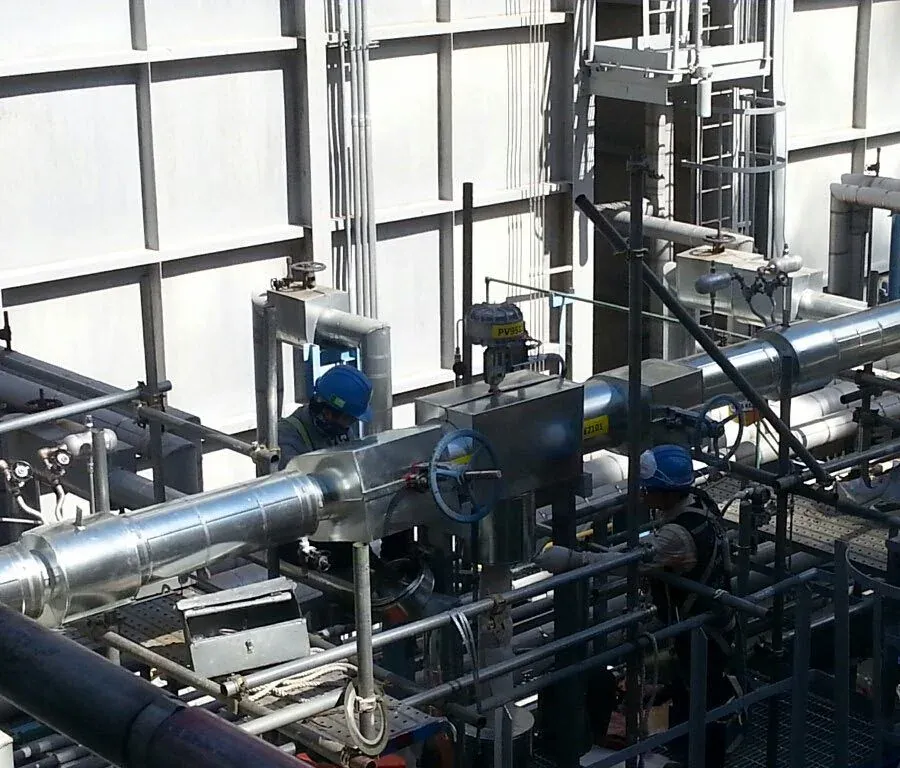
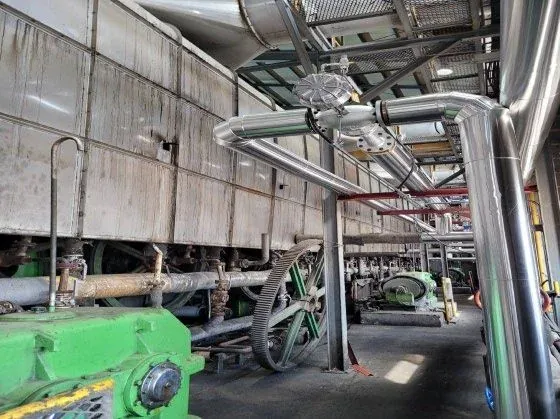
Original situation
The dryer section of a paper machine with 59 drying cylinders ran as a cascade: each steam group’s condensate and blow-through steam went to a flash tank, and the flash steam fed the next, lower-pressure group. The last stage ended at a condenser and a vent.
Technical enhancement
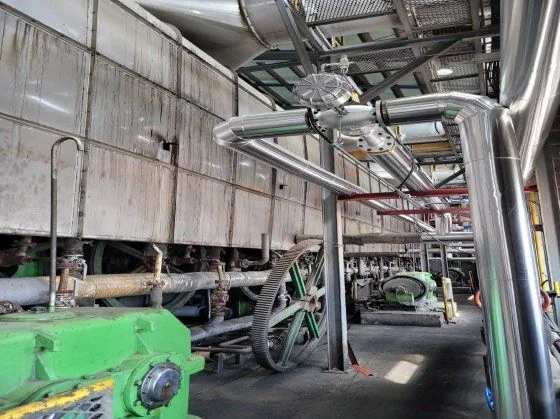
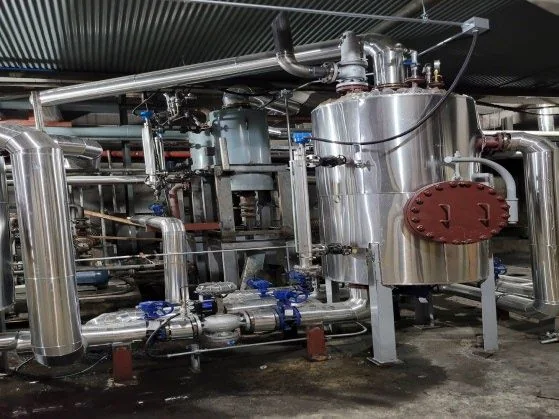
- The cascade became a direct system: a Jetomat® (Baelz 590) at each steam group, nine in all, driven by motive steam from the header.
- Each group drains to its own separator; the group’s Jetomat draws the separator vapour back into the same group.
- The condensate joins the existing return to the boiler house. Installed in the first half of 2012.
The result
| Before | After | |
|---|---|---|
| Steam per tonne of paper | 1.66 t | 1.56 t (−0.10 t/t) |
| Production | 285.1 t a day | 291.6 t a day (+2.3%) |
| Steam | 480 t a day | 462 t a day (−3.75%) |
- About 6% energy saving against a 5% guarantee: 119% of the plant’s energy-cost target for 2012
- About Rs 3.6 crore a year, as calculated by the plant at its 2012 output and steam price
Why it works
In a cascade every group lives on the flash steam of the group before it, so the pressure across each group, and with it the condensate removal, is set by the cascade rather than by what the cylinders need. With a Jetomat at each group, every group has its own pressure: the Jetomat drives the group’s blow-through steam round again, keeping a steady flow through the cylinders. Less steam ends up at the condenser and the vent.
Takeaway
A cascade dryer section is only as good as its weakest group. One Jetomat per group gives each its own pressure and stops the steam leaking out at the end of the line.