
The Cost of Doing Nothing: How Outdated Steam Systems Drain Profits
INTRODUCTION
If your plant still relies on throttling control valves, aging steam traps, and open vents, you’re paying a “silent tax” every hour you run. Pressure let-down throws useful energy away, Flash Steam is vented to atmosphere, traps fail and leak, and temperature swings hit product quality. The good news: modern Steam Jet Ejectors (Jetomat) act like compact Thermo Vapour Recompressors that recycle these losses. Plants routinely report double-digit Saving Energy, fewer moving parts to maintain, and steadier Heating Systems—often with payback measured in months, not years.
WHAT ARE “OUTDATED STEAM SYSTEMS”
Outdated Steam Systems are loops that control load primarily with:
Pressure-Reducing Valves (PRVs): They drop pressure (and exergy) but don’t recover it.
Banks of Traps: Necessary in throttled systems, but they fail, blow live steam, and increase maintenance.
Open Vents / Flash Tanks: Low-pressure vapor leaves as plumes—money “going up in steam.”
By contrast, a Steam Thermocompressor (Jetomat) uses motive steam through a precisely engineered Nozzle Design to entrain low-pressure vapor and Re-pressurize it. This Steam Jet Ejector Working Principle (jet + diffuser and nozzle) turns a waste stream into useful mixed steam—acting as a non-rotating Steam Compressor / Vapor Compressor that recycles energy in-line.
WHERE THE COST COMES FROM
1) Throttling Loss at PRVs
What Happens: 12–15 bar steam is throttled to 3–6 bar. The pressure potential is dissipated as heat with no work recovered.
Effect: Higher specific steam consumption to hit the same temperature; boilers fire harder; utilities spend rises
2) Venting of Flash Steam
What Happens: Low-pressure vapor from dryers/evaporators/heat users vents to atmosphere or is poorly recovered in a flash tank.
Effect: Direct energy loss and visible plumes (compliance, safety, and PR pain). A Flash Steam Recovery System is absent or undersized.
3) Trap Failures and Live-Steam Leaks
What Happens: Traps stick open or shut; bypasses get left open. Aging traps waste steam or flood exchangers.
Effect: Unplanned downtime, water hammer risk, poor Steam and Condensate balance, and large hidden utility losses.
4) Quality Losses from Temperature Swings
What Happens: Throttled loops and cycling traps produce uneven surface temperatures and thick Steam Condensate films on heat surfaces.
Effect: Lower heat transfer coefficients, unstable drying/evaporation, moisture variability, and downstream rejects.
5) Safety Valve Lifting (a real-world red flag)
What Happens: Incorrect sizing/controls cause chronic over-pressure and the safety valve “sings,” dumping steam to atmosphere.
Effect: Massive fuel burn for zero process benefit, water/chemical wastage, and safety concerns.
Example: In one well-documented case, swapping an oversized unit for a right-sized Thermocompressor Design stopped constant relief, cut losses by ~€14,880/month, and paid back in ~1.7 months—without adding rotating machinery.
THE MODERN ALTERNATIVE: THERMOCOMPRESSION WITH JETOMAT
How it Works
Motive Steam Acceleration: High-pressure steam expands through the ejector Nozzle, creating a high-velocity jet.
Suction & Entrainment: That jet induces vacuum to entrain low-pressure vapor (Flash Steam) from vents/returns.
Mixing: Momentum transfers from the motive jet to the suction vapor.
Pressure recovery: The Diffuser converts velocity back into pressure, delivering Mixed Steam at your setpoint.
This is the Thermo Compressor Working Principle. Instead of a PRV that only drops pressure, the Steam Jet Thermocompressor (Jetomat) Reuses it—forming a built-in Heat Recovery System. Because it has no rotating internals, it’s robust and maintenance-light compared to mechanical compressors or big valve-and-trap arrays.
WHAT CHANGES IN THE LOOP
Fewer Traps & Fittings: Continuous entrainment forms a Condensate and Flash Steam Recovery system, often allowing trap counts to collapse (and sometimes be eliminated) on specific sections.
Flatter Temperatures, Better Heat Transfer Solutions: Higher internal steam velocity thins condensate films; surfaces run hotter/more uniformly at the same header pressure.
Tighter Control: Mixed-steam pressure (or temperature) is regulated with a standard control valve on the motive line, pairing easily with your PLC/DCS.
Less Ancillary Hardware: In many use cases, reliance on a dedicated Steam Separator or large flash vessels is reduced because you’re recompressing the vapor rather than venting it.
WHAT YOU GAIN BY UPGRADING
1) Immediate Energy Recovery and Fuel Reduction
Typical compression-mode results: 10–30% direct steam savings where venting/let-down existed.
Some dryer/evaporator sections report even larger cuts when traps and vents are removed and Jetomat takes over the throttling role.
2) Water and Chemical Savings
Keeping condensate in-loop reduces make-up water and treatment chemicals. Plants have recorded dramatic reductions when venting and trap leakage were addressed.
3) Maintenance Relief and Reliability
Fewer traps to survey/replace, fewer live-steam leaks, no rotating equipment in the Steam Equipment itself. Ejectors are largely maintenance-light once sized and installed.
4) Product Quality & Throughput
More uniform surface temperatures and higher heat flux improve drying/evaporation consistency. Lines typically support higher speeds and tighter specs—fewer rejects, more saleable output.
5) Safety & Compliance
Correctly sized Thermocompressors stop chronic safety-valve lifting and remove big atmospheric plumes. That’s safer, quieter, and friendlier for neighbors and inspectors.
6) Flexible Across Industries
Paper & Corrugated: dryer sections, hot plates, preheaters.
Textile: cylinder dryers, stenters, wash ranges.
Food & Beverage / Chemicals: evaporators, reboilers, cookers, sterilizers.
If you’ve got throttling plus visible venting, a Steam Jet Compressor can usually recover it.
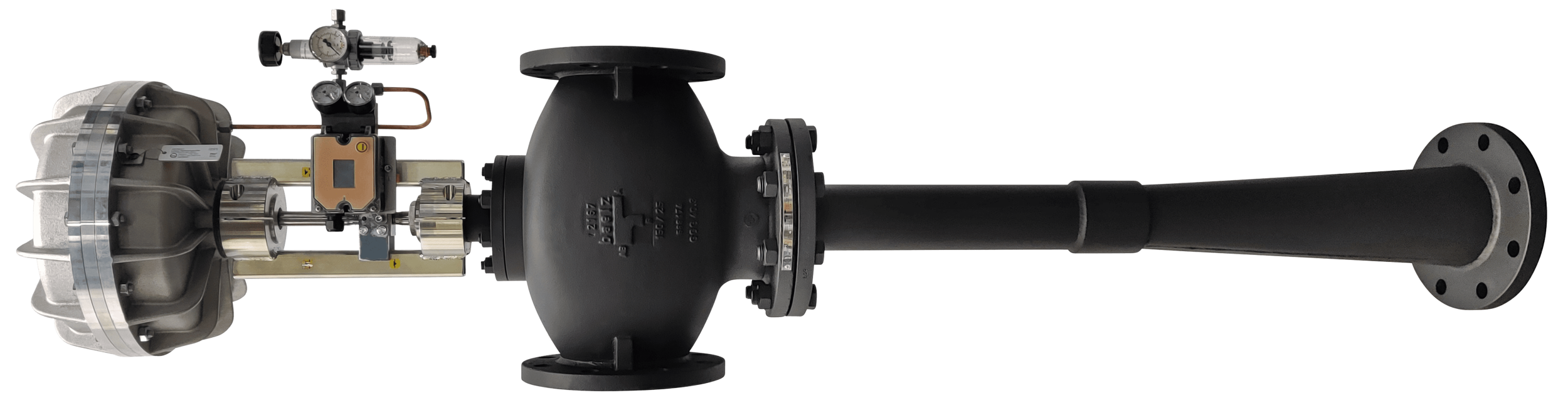
Jetomat Thermocompressor
CONCLUSION
Doing Nothing is Expensive. Throttling wastes exergy; vents and failed traps waste steam; temperature swings waste product. A Jetomat Steam Thermocompressor replaces “drop & dump” with “entrain & reuse”—a compact upgrade that Recycles Flash Steam, stabilizes temperatures, and cuts fuel.
HOW TO PROCEED
Screen: Walk the plant and list where you see vent plumes, chronic trap issues, or PRVs dropping >3–4 bar.
Measure: Capture header pressure/temperature, vent rates, loads, and target mixed pressure.
Engineer: Size a Thermocompressor Design (nozzle + diffuser and nozzle) for each candidate service; define controls (hold mixed pressure or temperature).
Pilot: Convert one high-loss user; trend steam, make-up water, and product KPIs for 2–4 weeks.
Scale: Standardize across similar services; roll in a sitewide Flash Steam Recovery System strategy.
Want a numbers-first assessment? We’ll analyze your Steam and Condensate data, identify Heat Recovery System opportunities, and propose a right-sized Steam Jet Thermocompressor (Jetomat) to start Saving Energy—without adding rotating machinery.