
Sustainability Wins: How Jetomat Cuts Energy Loss & Emissions
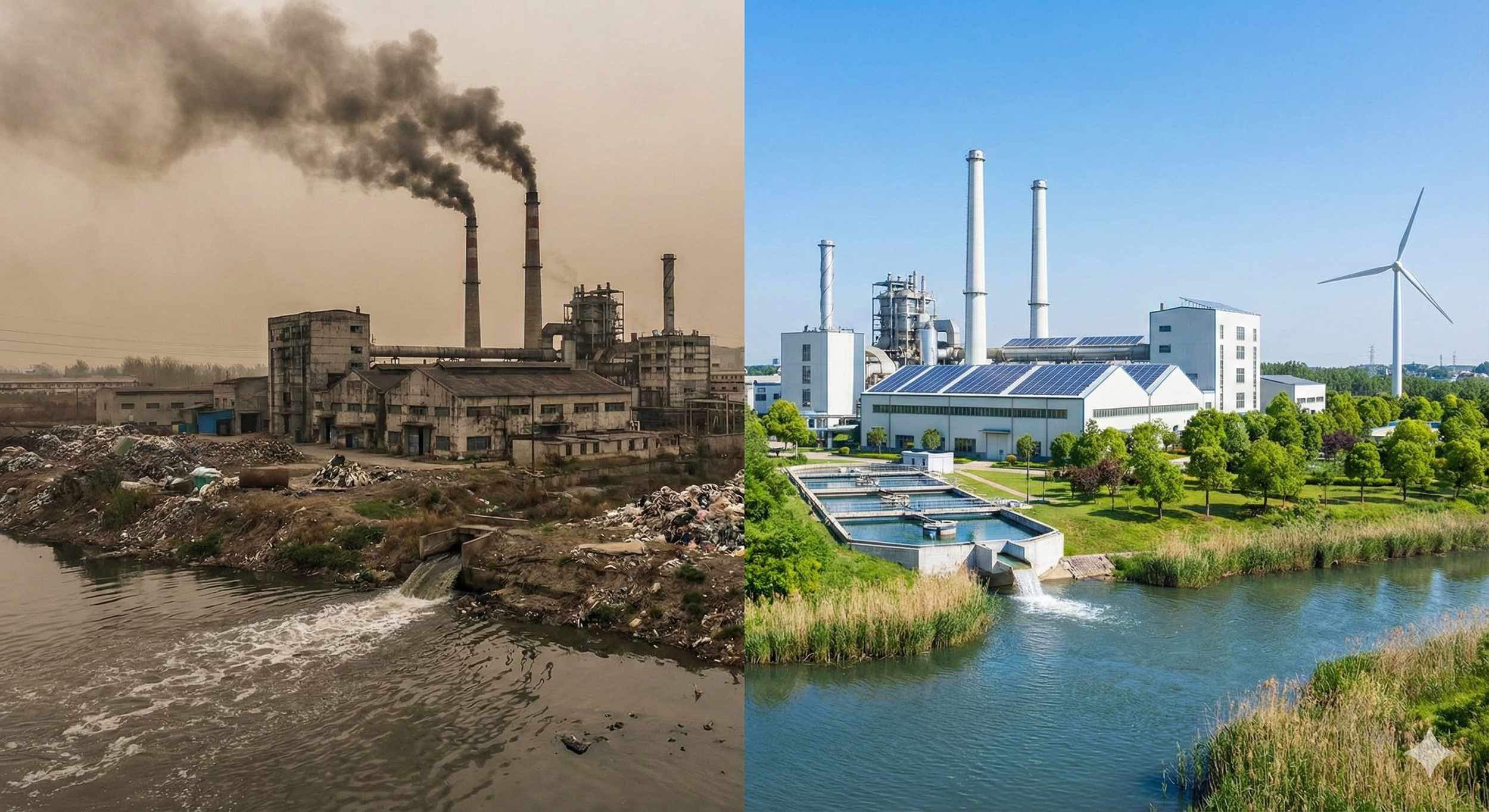
ENERGY EFFICIENCY & CLIMATE GOALS
In today’s industrial landscape, improving energy efficiency is not only about cost savings – it’s central to meeting sustainability and carbon reduction goals. Many manufacturing sectors are under pressure to Reduce Their Energy Consumption and Emissions for the sake of both the planet and compliance with stricter regulations.
Steam systems, often a large source of energy use and CO₂ emissions in plants, offer big opportunities for greener operation.
Jetomat thermocompressors contribute directly to sustainability by Eliminating Energy Waste and thereby cutting fuel burn & emissions. Every bit of steam that is recycled by a Jetomat is fuel that the boiler doesn’t have to fire, translating to reduced greenhouse gas output.
CUTTING FUEL = CUTTING CO₂
The most direct environmental benefit of Jetomat use is the reduction in fossil fuel consumption. For a rough sense of scale, consider the earlier example where capturing 4,500 kg/hr of waste steam saved ~94,000 MMBtu per year. If that steam was produced by burning natural gas, those 94,000 MMBtu correspond to on the order of 5,000 tons of CO₂ emissions avoided annually (assuming typical emission factors).
That’s equivalent to removing over a thousand passenger cars’ worth of emissions each year. In any scenario, using less fuel means proportionally lower CO₂ and other pollutants (NOx, SO₂ for coal/oil, etc.).
Jetomat-driven efficiency gains thus directly support corporate carbon footprint reduction targets. Many companies have publicly committed to percentage reductions in CO₂ by certain dates; investing in steam recompression technology is a concrete project that moves the needle in that direction.
WATER & WASTE REDUCTION
Steam waste doesn’t just waste fuel; it also wastes water and water treatment chemicals. When low-pressure steam is vented to atmosphere, all the treated water in that steam is lost, and fresh make-up water must be added to the system. This makeup water requires pumping, heating, and chemical treatment (for hardness, oxygen scavenging, etc.), all of which carry environmental impacts. By recovering steam instead of venting, Jetomat reduces the continuous blow-off of purified water and chemicals.
As the U.S. Department of Energy points out, venting steam means wasting not only energy but also water and water-treatment chemicals that went into generating that steam. A thermocompressor minimizes these losses, so the boiler system cycles less water and consumes fewer treatment chemicals over time. The result is less water withdrawal from local sources and lower discharge of effluent – both positives for a facility’s environmental profile.
Another aspect is electricity: if less makeup water is needed, pumps run less, and if the boiler firing rate drops, fans and other electrical equipment cycle down, saving a bit of electrical energy too. One Jetomat supplier notes that reducing live steam load yields a direct reduction in fuel, water, and electricity consumption in the boiler house. While the electricity savings are a smaller piece of the pie, they contribute to lower overall energy intensity and associated emissions from power generation.
LOWERING THERMAL POLLUTION & NOICE
Venting steam not only wastes energy but also often produces plumes of hot condensate vapor and noise. Eliminating routine venting through steam recompression can improve the local environmental conditions around a plant. Workers and neighbors benefit from fewer loud vent episodes and less visible steam cloud release. Though this is a minor sustainability aspect, it reflects a more responsible and community-friendly operation.
SUSTAINABILITY IN PRACTICE - AN EXAMPLE
A textile dyeing factory aiming for ISO 50001 energy management certification identified flash steam recovery as a key project. By installing a Jetomat thermocompressor on their main condensate return, they reduced the boiler fuel usage by 12%. This cut the plant’s CO₂ emissions by roughly 800 tons/year. It also lowered water consumption by reducing condensate losses, saving about 5,000 cubic meters of water annually that would otherwise go to the drain as flash steam and condensate. These improvements helped the facility meet its energy efficiency targets and were highlighted in its sustainability report.
The project had a dual benefit: it improved the company’s bottom line and its environmental performance indicators – truly a sustainability win-win.
SUPPORTING CORPORATE ESG GOALS
Implementing Jetomat technology can be a tangible part of an organization’s Environmental, Social, and Governance (ESG) initiatives. It directly addresses environmental metrics (energy intensity, emissions per unit output) and shows a commitment to innovation in sustainability.
Moreover, projects like these often qualify for government or utility Incentives For Energy Efficiency or Carbon Reduction, providing further positive economic and environmental impact. By cutting energy loss and emissions, Jetomat thermocompressors help industrial plants become greener – not in a vague way, but in quantifiable reductions of fuel, water, and pollutant outputs.
CONCLUSION
The Jetomat isn’t just a tool for process improvement; it’s a tool for sustainability. It exemplifies how engineering solutions can align economic and environmental interests. Reducing Steam Waste Reduces Our Resource Waste And Emissions. For plant engineers and sustainability managers alike, adopting Jetomat thermocompressors means taking a significant stride toward cleaner production.
In the journey to decarbonize industry and use resources more wisely, technologies like Jetomat provide practical, impactful wins on the ground.